Showing posts with label 2011. Show all posts

Sunday, November 18, 2012

2011 Volkswagen XL1 Concept


VW XL1 Concept

Future mobility is one of the most stimulating topics of our time. The key question here: Just how much could the energy consumption of cars be reduced if all the stops were pulled out for efficiency? There is now an answer to this question, and Volkswagen is delivering it in the form of the new Volkswagen XL1 Concept. Combined fuel consumption: 0.9 l/100 km. No other hybrid car powered by an electric motor / internal combustion engine combination is more fuel efficient. The prototype makes its world debut at the 2011 Qatar Motor Show (26-29 January, 2011).

Conceptually, the Volkswagen XL1 represents the third evolutionary stage of Volkswagen's 1-litre car strategy. When the new millennium was ushered in, Prof. Dr. Ferdinand Piëch, who is today Chairman of the Supervisory Board of Volkswagen AG, formulated the visionary goal of bringing to the market a production car that was practical for everyday use with a fuel consumption of 1.0 litre per 100 km. In the new XL1, Volkswagen is demonstrating that this goal is now within reach.

The new Volkswagen XL1 attains a CO2 emissions value of 24 g/km, thanks to a combination of lightweight construction (monocoque and add-on parts made of carbon fibre), very low aerodynamic drag (Cd 0.186) and a plug-in hybrid system - consisting of a two cylinder TDI engine (35 kW/48 PS), E-motor (20 kW/27 PS), 7-speed dualclutch transmission (DSG) and lithium-ion battery. The results: with fuel consumption of 0.9 l/100 km, the new Volkswagen XL1 only emits 24 g/km CO2. Since it is designed as a plug-in hybrid, the XL1 prototype can also be driven for up to 35 kilometres in pure electric mode, i.e. with zero emissions at point of use. The battery can be charged from a conventional household electric outlet. Naturally, battery regeneration is also employed to recover energy while slowing down and store as much of it as possible in the battery for re-use. In this case, the electric motor acts as an electric generator.

Despite the very high levels of efficiency, developers were able to design a body layout that offers greater everyday practicality, incorporating side by side seating rather than the tandem arrangement seen in both the first 1-litre car presented in 2002 and the L1 presented in 2009. In the new Volkswagen XL1, wing doors make it easier to enter and exit the car. Further progress has been made by manufacturing body parts from carbon fibre reinforced polymer parts (CFRP), a technique used in Formula 1 car construction. Once again, Volkswagen has successfully achieved significant reductions in production costs - an important step forward to make viable a limited production run of the XL1. Background: together with suppliers, Volkswagen has developed and patented a new system for CFRP production in what is known as the aRTM process (advanced Resin Transfer Moulding).

The most efficient car in the world

The new Volkswagen XL1 Concept shows the way forward for extreme economy vehicles and clean technologies. It also demonstrates that such cars can also be fun. The feeling when driving the XL1 is truly dynamic - not based on pure power, rather on its pure efficiency. Two examples:

    To travel at a constant speed of 100 km/h, the prototype only needs 6.2 kW/8.4 PS - a fraction of the performance of today's cars (Golf 1.6 TDI with 77 kW and 7-speed DSG: 13.2 kW/17.9 PS).
    In electric mode, the Volkswagen XL1 needs less than 0.1 kWh (82 Wh/km) to complete a one kilometre driving course. These are record values.

When the full power of the hybrid system is engaged, the Volkswagen prototype accelerates from 0 to 100 km/h in just 11.9 seconds; its top speed is 160 km/h (electronically limited). Yet these numbers alone do not tell the whole story: Since the XL1 weighs just 795 kg, the drive system has an easy job of propelling the car. When full power is needed, the electric motor, which can deliver 100 Newton metres of torque from a standstill, works as a booster to support the TDI engine (120 Newton metres torque). Together, the TDI and E-motor deliver a maximum torque of 140 Newton metres in boosting mode.

Plug-in hybrid concept

With the new XL1, Volkswagen is implementing a plug-in hybrid concept, which utilises the fuel efficient technology of the common rail turbodiesel (TDI) and the dual clutch transmission (DSG). The TDI generates its stated maximum power of 35 kW/48 PS from just 0.8 litre displacement. The entire hybrid unit is housed above the vehicle's driven rear axle. The actual hybrid module with electric motor and clutch is positioned between the TDI and the 7-speed DSG; this module was integrated in the DSG transmission case in place of the usual flywheel. The integrated lithium-ion battery supplies the E-motor with energy. The high voltage energy flow from and to the battery or E-motor is managed by the power electronics, which operates at 220 Volts. The Volkswagen XL1's body electrical system is supplied with the necessary 12 Volts through a DC/DC converter.

Interplay of E-motor and TDI engine: The E-motor supports the TDI in acceleration (boosting), but as described it can also power the XL1 Concept on its own for a distance of up to 35 km. In this mode, the TDI is decoupled from the drivetrain by disengaging a clutch, and it is shut down. Meanwhile, the clutch on the gearbox side remains closed, so the DSG is fully engaged with the electric motor. Important: The driver can choose to drive the Volkswagen XL1 in pure electric mode (provided that the battery is sufficiently charged). As soon as the electric mode button on the instrument panel is pressed, the car is propelled exclusively by electrical power. Restarting of the TDI is a very smooth and comfortable process: In what is known as "pulse starting" of the TDI engine while driving, the electric motor's rotor is sped up and is very quickly coupled to the engine clutch. This accelerates the TDI to the required speed and starts it. The entire process takes place without any jolts, so the driver hardly notices the TDI engine restarting.

When the XL1 is braked, the E-motor operates as a generator that utilises the braking energy to charge the battery (battery regeneration). In certain operating conditions the load shared between the TDI engine and the electric motor can be shifted so that the turbodiesel is operating at its most favourable efficiency level. The gears of the automatically shifting 7-speed DSG are also always selected with the aim of minimising energy usage. The engine controller regulates all energy flow and drive management tasks, taking into account the power demanded at any given moment by the driver. Some of the parameters used to realise the optimum propulsion mode for the given conditions are: accelerator pedal position and engine load, as well as the energy supply and mix of kinetic and electrical energy at any given time.

Two-cylinder TDI uses mass production technology: The 0.8 litre TDI (35 kW/48 PS) was derived from the 1.6 litre TDI, which drives such cars as the Golf and Passat. The 0.8 TDI exhibits the same data as the 1.6-litre TDI common rail engine in terms of cylinder spacing (88 mm), cylinder bore (79.5 mm) and stroke (80.5 mm). In addition, the Volkswagen XL1 Concept's two-cylinder and the mass produced four cylinder share key internal engine features for reducing emissions. They include special piston recesses for multiple injection and individual orientation of the individual injection jets. The excellent, smooth running properties of the common rail engines were transferred to the two cylinder engine. within addition, a balancer shaft that is driven by the crankshaft turning at the same speed optimises smooth engine running.

Meanwhile, the TDI's aluminium crankcase was constructed to achieve high rigidity and precision, which in turn leads to very low friction losses. With the goal of reducing emissions, exhaust gas recirculation and an oxidation catalytic converter as well as a diesel particulate filter are used. Equipped in this way, the 0.8 TDI already fulfils the limits of the Euro-6 emissions standard.

Also designed for efficiency is the vehicle's cooling system. Engine management only cools the TDI by activating an externally driven electric water pump when engine operating conditions require it. This cooling system includes an automatically controlled air intake system at the front of the vehicle to reduce cooling system drag. This thermal management strategy also contributes towards reduced fuel consumption. A second electric water pump, which is also used only as needed, circulates a separate lower temperature coolant loop to cool the starter generator and power electronics.

CFRP body is a technical masterpiece

The development team made extraordinary strides in designing the CFRP body - in terms of its lightweight construction as well as its aerodynamics. A comparison to the Golf illustrates just how innovative the body concept of the new XL1 is.

The drag coefficient of the highly successful Golf is very good for the compact class: Cd (0.312) x A (frontal area 2.22 m2) equals a total drag figure of 0.693 m2 (Cd.A) providing this car with benchmark aerodynamic credentials in its class. Meanwhile, the Volkswagen XL1 exceeds this performance with a Cd value of 0.186 and a frontal area of 1.50 m2. The product of these two parameters yields a total drag, or Cd.A value of 0.277 m2 which is 2.5 times lower than that of the Golf.

Design for a new era: The VW XL1 is 3,888 mm long, 1,665 mm wide and just 1,156 mm tall. These are extreme dimensions. The Polo has a similar length (3,970 mm) and width (1,682 m), but it is significantly taller (1,462 mm). The height of the new XL1 is about the same as that of a Lamborghini Gallardo Spyder (1,184 mm). So, it is easy to visualise just how spectacular such a Volkswagen would appear on the road - as long and wide as a Polo, but with a low profile like a Lamborghini.

The wing doors of the new Volkswagen XL1 are also reminiscent of a high-end sports car. They are hinged at two points: low on the A-pillars and just above the windscreen in the roof frame, so they do not just swivel upwards, but slightly forwards as well. The doors also extend far into the roof. When they are opened, they free up an exceptionally large amount of entry and exit space.

Visually, the new XL1 also adopts the styling lines of the L1 presented in 2009; however, the new prototype has a more dynamic appearance thanks to its greater width. The design of the entire body was uncompromisingly subjected to the laws of aerodynamics. In front, the VW XL1 Concept exhibits the greatest width; the car then narrows towards the rear. Viewed from above, the form of the XL1 resembles that of a dolphin; especially at the rear, where the lines optimally conform to the air flow over the car body to reduce the Volkswagen's aerodynamic drag.

In side profile, the roofline reflects styling lines that trace an arc from the A-pillar back to the rear. The rear wheels are fully covered to prevent air turbulence; the air flows here are also optimised by small spoilers in front of and behind the wheels. Observers will look for door mirrors in vain; replacing them on the wing doors are small cameras which take on the role of digital outside mirrors that send images of the surroundings behind the car to two displays inside the vehicle.

The front end of the new Volkswagen XL1 Concept no longer exhibits the typical radiator grille; however, it still reflects the styling of the current Volkswagen "design DNA" with a predominance of horizontal lines. Specifically, there is a black cross-stripe (in the area where there is no longer a radiator grille) that combines with the energy-efficient dual LED headlights to form a continuous band. The actual air intake for cooling the TDI engine, battery and interior is located in the lower front end section and has electrically controlled louvres. The narrow turn indicators are also designed in LED technology; these form an "L" shape which vertically follows the wheel housing and horizontally a line beneath the headlights. This creates a front end, which - although it is completely redesigned and extreme in its dimensions - can immediately be recognised as a Volkswagen design by its clean lines.

    At the rear, the design takes an entirely new path, reinterpreting the brand values of precision and quality. A new dimension of Volkswagen styling was created here. Four characteristics are discernible:
    Once again, the dolphin body form that narrows towards the rear with very precise trailing edges for perfect aerodynamics.
    The coupé-shaped roofline without rear windscreen. Merging into the roofline is the large rear boot lid that covers the drive unit and 100 litre luggage space.
    A strip of red LEDs that frames the rear section at the top and on the sides. Integrated in this LED strip are the reversing lights, rear lights, rear fog lights and brake lights.
    A black diffuser, which exhibits nearly seamless transitions to the completely covered underbody.

Lightweight construction: more systematic than ever: Large sections of the new XL1's body consist of carbon fibre reinforced polymer (CFRP) - which is as lightweight as it is strong. Specifically, the monocoque with its slightly offset seats for driver and passenger and all exterior body parts are made of CFRP. The layers of carbon fibre, which are aligned with the directions of forces, are formed into parts with an epoxy resin system in the aRTM process. This material mix produces an extremely durable and lightweight composite. For a long time, it was considered impossible to manufacture a body of CFRP, like that of the new Volkswagen XL1 Concept, to industrial standards. Nonetheless, Volkswagen successfully found a cost-effective way to mass produce CFRP parts in sufficient volumes as early as 2009 - in the framework of the XL1 development project. Now this process has been further perfected.

CFRP is the ideal material for the body of the new XL1 because of its light weight. The XL1 Concept weighs only 795 kg. Of this figure, 227 kg represents the entire drive unit, 153 kg the running gear, 80 kg the equipment (including the two bucket seats) and 105 kg the electrical system. That leaves 230 kg, which is precisely the weight of the body - produced largely of CFRP - including wing doors, front windscreen in thin-glass technology as in motorsport and the highly safe monocoque. A total of 21.3 percent of the new Volkswagen XL1, or 169 kg, consists of CFRP. In addition, Volkswagen uses lightweight metals for 22.5 percent of all parts (179 kg). Only 23.2 percent (184 kg) of the new XL1 is constructed from steel and iron materials. The rest of its weight is distributed among various other polymers (e.g. polycarbonate side windows), metals, natural fibres, process materials and electronics.

Lightweight construction: safer than ever: The new XL1 is not only lightweight, but very safe as well. As mentioned, this is due in part to the use of CFRP as a material. In the style of Formula 1 race cars, the Volkswagen has a high-strength monocoque. In contrast to Formula 1, however, this safety capsule is enclosed on top - for safety. Depending on the type of collision, the load path may be directed through the A- and B-pillars, cant rails and sills, all of which absorb the impact energy. Additional side members and crossmembers in the front and rear perfect the car's passive safety.

Running gear with ESP utilises high-tech materials

The running gear is equipped with anti-roll bars at the front and rear and is characterised by lightweight construction with maximum safety. In front, a double wishbone suspension is used, while a semi-trailing link system is employed at the rear. The front and rear suspension are both very compact in construction and offer a high level of driving comfort. The running gear components mount directly to the CFRP monocoque in key areas.

Running gear weight has been reduced by the use of aluminium parts (including suspension components, brake calipers, dampers, steering gear housing), CFRP (anti-roll bars), ceramics (brake discs) magnesium (wheels) and plastics (steering wheel body). Friction-optimised wheel bearings and drive shafts, as well as an entirely new generation of optimised low rolling resistance tyres from MICHELIN (front: 115/80 R 15; rear: 145/55 R 16), contribute to the low energy consumption of the Volkswagen XL1 Concept. Safety gains are realised by an anti-lock braking system (ABS) and electronic stabilisation programme (ESP). That is because sustainability without maximum safety would not really be a step forward. The new VW XL1 shows how these two parameters can be brought into harmony.

2011 Volkswagen NILS Concept


VW NILS Concept

Volkswagen NILS, a single-seat electric concept vehicle that offers a glimpse of a new form of minimalist mobility, has been unveiled ahead of its public debut at the 2011 Frankfurt Motor Show. This concept car - which features an aluminium space frame, wing doors and free-standing wheels - has the dynamic performance of a sports car, yet travels silently, and with zero emissions.

The NILS project is supported by the German Federal Ministry of Transport, Building and Urban Development, and is designed to be both technically realistic and economically supportable.

'NILS anticipates the future. The goal of the NILS project is to research a technically realistic and economically feasible concept for a minimalist commuter vehicle that makes individual transportation more efficient and eco-friendly thanks to its electric drive,' said Prof. Dr. Jürgen Leohold, Head of Volkswagen Group Research.

Commenting from the strategic perspective is Dr. Rudolf Krebs, Group Chief Officer for Electric Traction: 'In terms of the Volkswagen Group's roadmap for electric mobility, these forward-thinking vehicle concepts play an especially important role. That is because the breakthrough of electric mobility will lead to new vehicle requirements - many of which are oriented towards very specific target groups. In advancing electric mobility to high-volume production, it is not enough to simply electrify existing vehicle models.'

With a range of 65 kilometres (40 miles) and a top speed of 130 km/h (80 mph) Volkswagen NILS would be the ideal vehicle for the majority of commuters in Germany. According to the German Bureau of Statistics, 73.9 per cent of all commuters residing between Berlin and Munich cover less than 25 kilometres (15.5 miles) on their way to work.

Cars have always been mirrors of their times - their design styles and technological standards reflecting a particular era - and NILS is no different. It uses emissions-reducing electric drive technology to fulfil the specific requirements of commuters. In Germany, for example, about 60 per cent of all commuters travel by car, according to the Federal Bureau of Statistics; of these over 90 per cent travel alone. Zero-emissions vehicles like NILS will offer these frequent drivers a new eco-friendly mobility solution.

Volkswagen NILS is a very compact car that requires extremely little space in traffic. It is only 3.04 metres long - making it about 50 cm shorter than the new Volkswagen up! - just 0.39 metres wide from wheel to wheel, and a mere 1.2 metres tall.

Volkswagen NILS has the same basic layout as a Formula 1 race car, with the driver in the middle, the engine in back, and free-standing outboard wheels. The 17-inch alloy wheels are equipped with 115/80 (front) and 125/80 (rear) tyres optimised for low rolling resistance.

Though its inspiration may come from Formula 1, the styling has its origins at the Volkswagen Design Centre in Potsdam, Berlin. Designer Thomas Ingenlath, the centre's director, said: 'NILS was designed to make a visual statement and transport a vision of the automotive future to the present. I am especially pleased that we managed to implement the concept of the two glass wing doors. This allowed us to create large transparent surfaces and simultaneously to make entering and exiting the vehicle very comfortable, even in the most cramped of parking spaces.'

Because Volkswagen NILS is so compact and lightweight (460 kg), it is a lot of fun to drive. It has a top speed of 130 km/h, and can accelerate to 100 km/h in less than 11 seconds. This is achieved using an electric motor with a reasonably small 15 kW nominal power and short-term peak power of 25 kW. A lithium-ion battery supplies the electric motor with energy. The battery capacity (5.3 kWh) enables driving ranges of up to 65 km, depending on the style of driving. A battery of this size is relatively inexpensive, and can be charged either via a conventional 230-volt electrical outlet (maximum charging time two hours) or at an electric vehicle charging station. The socket is located at the back underneath the rear lighting module.

The centrepiece of the electric drive system is the lightweight 19 kg electric motor together with its transmission and battery. Energy management is via a high-voltage pulse inverter, which - together with the 12-Volt DC/DC converter for the vehicle electrical system and the charger - forms an integral drive unit. All drive unit components are located compactly in an aluminium housing at the rear of NILS; drive is to the rear wheels.

The motor, battery and all other components are so compact that there is still space for a small but practical bootspace. The body-coloured area above the rear lighting module swings upward, revealing space suitable for items such as a case of drinks and a bag.

Optimal weight distribution helps to ensure that Volkswagen NILS allows drivers not only to commute with zero emissions, but also to have fun while doing so. The lightweight NILS drives like a go-kart. The steering is purely mechanical (the low weight means power assistance is unnecessary), while the electric motor produces its maximum torque of 130 Nm from standstill, via a one-speed transmission. Suspension is by double wishbones front and rear; while ESP (Electronic Stabilisation Programme) helps to tame any over-exuberance on the part of the driver.

Safety is of course even more important than fun, and NILS is fitted with an automatic distance control system. This uses radar sensors to scan the space in front of the vehicle over a distance of about 200 metres and uses brake interventions to ensure that the distance to vehicles in traffic in front of the car does not drop below a specified minimum value. The system can even automatically brake the car to a stop, depending on the situation. Not only are the four disc brakes used to brake; electric traction by electric motor and battery regeneration can be used to brake as well. Last but not least, Front Assist is integrated in the automatic distance control system. This continually active system warns the driver of a potential collision; at speeds below 30 km/h (18 mph), automatic braking can avoid a collision under some circumstances.

The instrument cluster is a seven-inch TFT display. The vehicle's speed is shown digitally in the middle, while energy flow is represented by bars. Another graphic display offers information on the driving range. The second central instrument is a mobile multifunctional device like the one used in the new up!: the Portable Infotainment Device (PID). It is snapped into theA-pillar to the right of the instrument cluster. Via touchscreen, the driver controls functions related to Navigation, Radio, Media, Telephone, Trip computer and - to preconfigure the driving range - 'Eco. The PID computes the expected driving range, then it not only displays the route on the map display, but also the radius and thereby the destinations that can be reached using the current battery charge.

To save on weight and costs, certain functional elements and controls do without electrical assistance. The side mirrors, for example, are adjusted manually. The heating and ventilation system has full electronic control, and there is seat heating. Located to the right of the steering column is the motor start-stop switch; this round switch is also used to select D, N or R.

The aluminium space frame body was designed to be a highly effective safety cell. The body in white is produced from extruded aluminium, cast aluminium and sheet aluminium. The roof frame together with the door mounts, a roll bar, the bootspace and the front bulkhead consist of high-strength sheet aluminium. Extruded aluminium is used in the side sills, the transverse profiles and the front and rear car sections. The front and rear side body are aluminium. Parts made of high-strength plastic include the bumpers and the trim panels on the side sills.

The frames of the wing doors consist of three main elements: an inner section, a crash reinforcement section and an exterior part. When closed, they offer optimal crash safety. The door windows are made of lightweight, scratch-resistant, layered polycarbonate, while the front window is made of laminated safety glass.

The headlights are striking bi-xenon modules, while the indicator lights and daytime running lights are white and yellow LEDs. In the acrylic glass of the rear lights - integrated in the rear section like small wings - the light generated by LEDs is routed via transparent semiconductors which (appropriately for an electric vehicle) consume minimal amounts of power.

2011 Volkswagen Golf R Cabriolet Concept


VW Golf R Cabriolet Concept

Volkswagen is presenting the VW Golf R Cabriolet as a concept car with 270 PS of power and a top speed of 250 km/h; it is a fascinating thought experiment in cabrio dynamics. This "power cabrio" also demonstrates the inexhaustible potential of the Golf.

Volkswagen just recently introduced the new Golf Cabriolet, and the designers and engineers of Volkswagen R GmbH have already come up with an extremely sporty variant of this model: the Volkswagen Golf R Cabriolet Concept. Like its closed top counterpart, the 199 kW / 270 PS Cabriolet concept races to the 100 km/h mark in less than six seconds. Their top speeds are also identical at 250 km/h. This makes the R Cabriolet the fastest open-top Golf ever. Even more impressive, however, is the engine's tremendous torque - 350 Newton metres from a low 2,500 rpm make this cabriolet an ideal cruiser.

Like the closed-top Golf R, the cabriolet was lowered by 25 mm via a sport chassis. A 17-inch brake system with internally ventilated discs at all wheels and blue painted high-performance brake callipers (including R-logo) enables impressive deceleration values. Making contact to the road surface on the Volkswagen Golf R Cabriolet Concept are 19-inch "Talladega" alloy wheels with size 235 tyres.

Naturally, the VW Golf R Cabriolet Concept also presents an especially sporty interior concept. Motorsport shell seats in dark blue carbon leather, combined with high-end Nappa leather in "Pure Grey", set the tone here. The backs of the shell seats are painted in luxurious black piano paint. Upholstery piping and decorative seams provide for colour contrast. Carbon accents emphasise the concept's technical-sporty character. The sand-blasted aluminium door sill plates with black piano paint inlays display finely crafted workmanship.

2011 Volkswagen Golf GTI Cabriolet Concept


VW Golf GTI Cabriolet Concept


Volkswagen has presented the VW Golf GTI Cabriolet Concept in a world debut at the 2011 Wörthersee - it is the first officially built open-top version of the icon. There are plenty of good reasons for introducing this extremely dynamic concept in 2011: this year, the Golf GTI celebrates its 35th anniversary, and the legendary GTI Meet at Wörthersee is taking place for the 30th time. 2011 is also the year of the new Golf Cabriolet. While the production Golf cabriolet can already be ordered, the Volkswagen Golf GTI Cabriolet Concept is still a concept. And what a concept!

Visually, the fire red "Firespark Metallic" open-top GTI shows independent ways: especially noteworthy here are the add-on parts designed in shiny black piano paint. The concept's styling focuses on extreme precision with lines that appear as if cut by a razor. The add-on parts themselves are on the one hand delicate and light, but at the same time sturdy and integrally designed. A look at the front and rear spoilers or the side sills designed in the style of splitters used in motorsport shows this impressively.

Visual highlights: the front fog lights of the GTI gave way to air guides for ventilating the high-performance brake system that is used in the cabriolet. In side profile, the open-top GTI's look is characterised by black-silver 19-inch "Glendale" alloy wheels with 235 tyres. They fill out the wheel housings completely, since the Golf's ride height was lowered with a coilover suspension. Another feature that stands out in side profile are the brake callipers painted "Tornado Red" with black GTI logos.

The concept car's interior was upgraded with "Black Stripe" pattern accents and Nappa leather seats with red GTI logos in the head restraints. The seams between the individual leather surfaces provide a sporty contrast; they are styled in "Flash Red" and "Crystal Grey". Two-tone door inserts were coordinated with the seat pattern. As on the interior door panels, fine red decorative seams also customise the leather-trimmed steering wheel and the trim of the gear shift and parking brake levers. This colour is repeated in the red borders of the black safety belts and the black-red piping of the floor mats. Classic effects are achieved by aluminium door sill plates with worked-in GTI logo. By the way, the cabriolet's driving performance - with its 155 kW / 210 PS GTI engine - fully matches that of the closed-top GTI - i.e. right around 240 km/h and seven seconds for the sprint to 100 km/h. A genuine GTI!

Tuesday, November 13, 2012

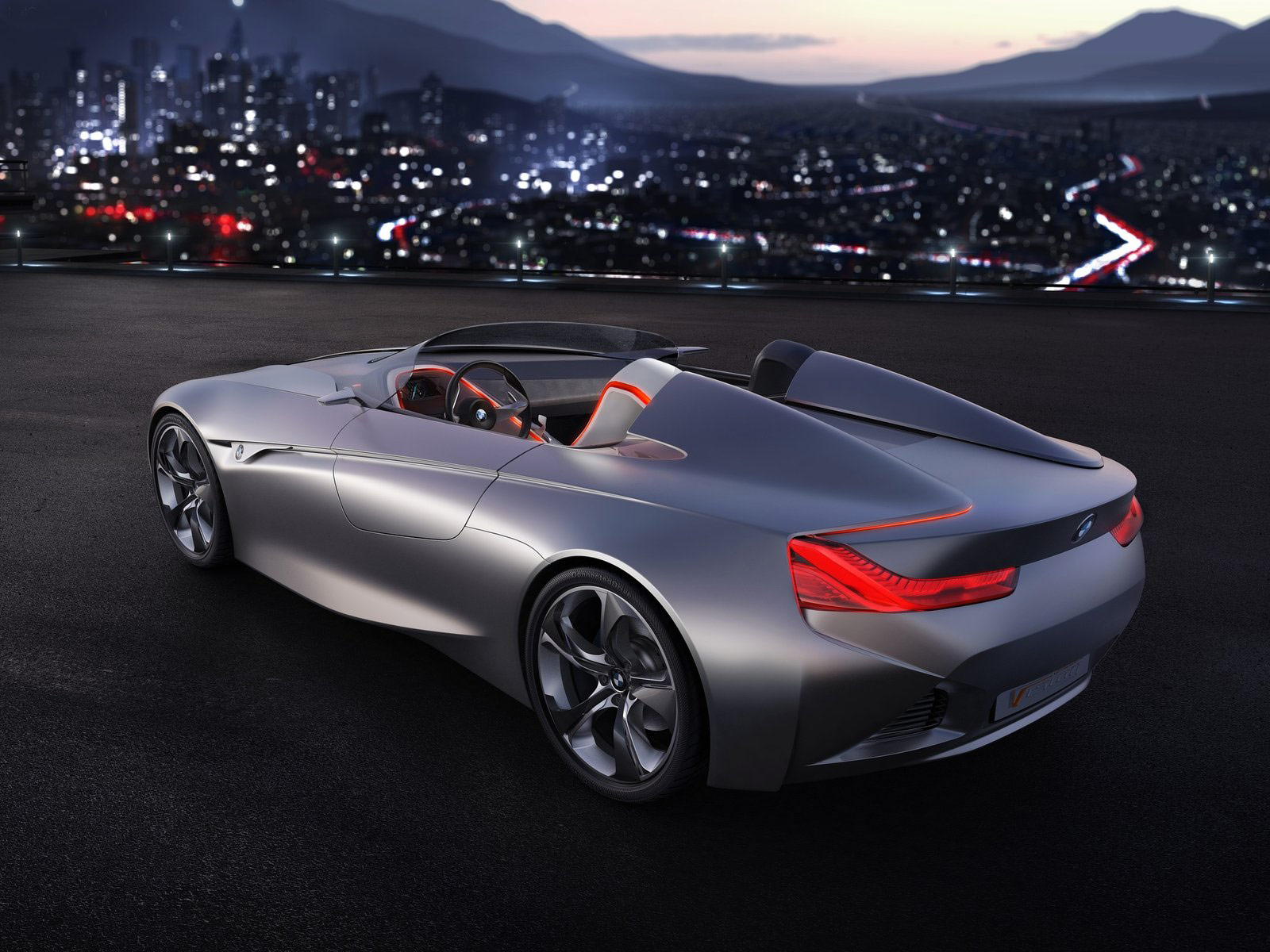
2011 BMW ConnectedDrive Concept


The 2011 Geneva Motor Show will see the world premier of the BMW ConnectedDrive Concept car. The concept study, in a two-seat roadster guise, presents the automobile as a fully integrated part of the networked world in both its design and technological innovations. It is with this concept that BMW presents the potential of current and future in-car technology for optimizing comfort, safety and infotainment.

The BMW ConnectedDrive Concept employs a layering principal in its design, demonstrating the bond between the driver, passenger, vehicle and the surrounding environment. This is visualised by the complex light installation which shows the path of data exchange with the driver and passenger as the start and end point of each interaction.

The interior is divided into three layers - comfort, infotainment and safety - each with a corresponding light installation. Each layer is defined by a colour, rhythm, motion and texture and, through the transparent surfaces the path taken by the information can be seen via fiber optic lighting.

The first layer focuses on safety, with a red light wrapping around the driver and coming together in a cone on the bonnet. This represents the flow of safety-specific information and the driver's focus on the road ahead. The second layer encompasses the safety layer and extends to the passenger cell, focusing on infotainment. This layer promotes active social exchangement between the driver and passenger and is outlined by the blue ribbon of light. The final layer, defined by the green light flow, concentrates on the interaction of the vehicle with the world around it. The emphasis is on the outside of the vehicle, starting and ending with the two antennas, in place of wing mirrors, providing the data link to the surrounding environment.

The layering principal in the BMW ConnectedDrive Concept requires individual components to perform a number of roles. This can be seen in the headlights and rear lights with their integrated sensors monitoring the traffic and external environment which feed information directly to the driver allowing him to take appropriate action.

The concept embodies the dynamic BMW design language with its long wheelbase, set back seating position and long bonnet but combines it with taut surfaces and distinctive flowing lines. This results in an interesting play of light and shadow making the car appear as if it is accelerating even at a standstill. The sliding doors, inspired by those on the BMW Z1, disappear into the body of the car. This allows the BMW ConnectedDrive Concept to be driven with the doors open, emphasising the link between the vehicle and its environment.

The BMW ConnectedDrive Concept showcases the current and future capabilities of BMW's ConnectedDrive technologies. Advanced Head-Up Display takes the technology currently available in production BMWs even further, placing a three-dimensional display of key information in the direct sight line of the driver, eliminating the need for the driver's eyes to refocus. The three-dimensional display allows the real view to be overlaid with virtual information, highlighting hazards allowing the driver to assimilate all of the information quickly and take appropriate action.

In addition to Advanced Head-Up Display the BMW ConnectedDrive Concept is equipped with a freely programmable instrument cluster to provide the driver with additional information, optically emphasised to a greater or lesser degree. While for the first time passengers get their own information display, out of the driver's field of vision, allowing them to evaluate information, music or navigation details and pass them onto the driver with a simple touch of a finger.

The BMW ConnectedDrive Concept demonstrates the interaction between the driver and the passenger and shows how networking with the environment can reach new levels.

2011 BMW ActiveE Concept


The 2011 Geneva Motor Show will see the world premier of the BMW ActiveE Concept. Based on the current BMW 1-Series Coupé, the BMW ActiveE is the second electric test vehicle to be created by the BMW Group.

With four seats and a luggage compartment of 200 litres, the BMW ActiveE is the first electric vehicle from the BMW Group to combine the space and comfort of a traditionally powered BMW with a fully electric drivetrain. Intelligent packaging ensures that the driver and all three passengers have the same head, leg and shoulder room as they would in a standard BMW 1-Series Coupé.

At the heart of the BMW ActiveE is a powerful electric synchronous motor which propels the car from zero to 60mph in just nine seconds, delivering 168hp and maximum torque of 250Nm, from a standing start. While its top speed is electronically limited to 90mph. The BMW ActiveE maintains the dynamic driving style that is typical of a BMW, with a low centre of gravity and 50:50 weight distribution to enhance traction and power transfer of the high torque.

Replacing the engine block, transmission and fuel tank are three large energy storage units containing lithium-ion cells, developed in conjunction with SB LiMotive. These modules are protected by a steel-plate battery housing with integrated liquid cooling system, to keep the batteries at optimum operating temperature helping to increase the range. These housings also help to ensure that the BMW ActiveE meets the same stringent safety standards as the BMW 1-Series Coupé, meeting and exceeding the levels legislated.

The BMW ActiveE is engineered so that when the driver takes his foot off the accelerator pedal the motor becomes a generator and feeds the electricity created from kinetic energy back into the vehicle battery, while at the same time braking torque is created, slowing the vehicle down. This recuperation of energy can increase the range by up to 20 per cent.

For the first time in a BMW Group electric vehicle the BMW ActiveE features an 'intermediate position' for the accelerator pedal that results in the car's own kinetic energy being used to move forward, without consuming energy from the batteries. In essence it is a 'gliding' mode. With previous electric vehicles when the accelerator lifts the car automatically starts to brake. To further increase the range of the BMW ActiveE ECO PRO Mode can be selected whereby the drive configuration and comfort functions are modified to use less energy and facilitate a more efficient driving style. In ECO PRO mode the heating and air conditioning system are programmed to use less energy and the accelerator demands less power with the same travel.

The BMW ActiveE retains the dynamic looks of the traditionally powered BMW 1-Series Coupé but with circuit inspired graphics, a scoop in the bonnet and a closed rear apron, with no exhaust pipes, to distinguish it. Inside Pearl Grey Dakota leather seats with Blue contrasting seams, along with a revised instrument cluster are the main indicators of the electric drivetrain. Instead of the traditional fuel gauge and rev counters the dials show the level of charge left in the battery and the amount of energy being used and recuperated.

The BMW ActiveE is not dependent on a specific energy source and so can be charged using 32-ampere wallbox in five hours, or overnight from a conventional domestic socket. This allows greater flexibility allowing the car to be charged wherever there is an electricity supply.

Starting in 2011, a test fleet of over 1,000 BMW ActiveE vehicles will be trialed in the USA, Europe and China and will provide valuable insights into the everyday use of the electric vehicle. The knowledge and insights gained from the field trials of the BMW ActiveE will be fed back for the future development of the Megacity Vehicle, due to go into production in 2013. BMW UK will be leasing BMW ActiveEs to select customers.