Showing posts with label Jaguar. Show all posts

Friday, September 11, 2015

Jaguar F-Type Project-7


Jaguar finally \'unload\' the identity of the F-Type Project-7 latest. this is often a significant step taken by land car maker is. Obviously, additionally to showing in fashion thus unpleasant, it\'s additionally touted as a product of the quickest road automotive within the history of big cat cars.

While still awaiting the official debut at the Goodwood competition of Speed ​​on Gregorian calendar month twenty six, tomorrow, the initial type shown by a convertible supported the F-type is enough to rekindle the keenness of the fans of big cat.

Jaguar Project 7
Based on the data gathered by gtspirit (25/06), the big cat F-Type Project-7 was born because the best product of the special operations team of big cat Land Rover United Nations agency known as themselves as a Special Vehicle Operations square measure centralized during a special facility in england

Jaguar Project 7
Want to understand a lot of concerning the privilege of riding masculine this one? See deh on next page

Jaguar XE Price And Specs


Jaguar XE 2015 Release Date Price Review - The Jaguar XE, an alternate and massively foremost auto for the British brand, has been revealed. The XE's passage fires Jaguar go into the clash in the immensely forceful littler authority auto market where any similarity of the BMW 3 Series, Audi A4 and Mercedes C-Class for the most part hold impact.

General society revealing of the XE returned off the of a rich dispatch event in London which Jaguar trailed by flying the auto over the city by helicopter at sunset. No expense has been spared in confirming the new XE arrived with an impact and Jaguar is expecting tremendous things from its newcomer in regards to arrangements influence.


Jaguar XE Price And Specs 


Jaguar XE 2015
Jaguar XE 2015
New Jaguar XE Coming Soon The Jaguar XE, which has been revealed publically at the Paris Motor Show, will be esteemed from £26,995 for the base six-pace manual 2.0-liter petrol SE, through Prestige and R-Sport to the execution S model. The 2.0-liter diesel will go from £29,775 to £35,425, dependent upon power yield and trim.

This makes the Jaguar XE ever so sort of more rich than its guideline match, the BMW 3 Series. The 320i SE, is just over £400 less lavish. That esteem differential risings with the diesel, expected that will be the most predominant model, as the equivalent 320d is £1,000.


Jaguar XE New Transmission Engineering 

New Jaguar XE Coming Soon A substitute first for Jaguar for very much a while is a manual box – an all-new six-rate unit – while a revised variation of the eight-speed ZF auto used some place else as an issue of the Jaguar span will in like manner underline.


Jaguar XE 2015
Jaguar XE 2015
Until four-wheel-drive models get in contact 2016 (concurring with the auto's presentation in the discriminating US showcase), the XE goes hand in hand with All Surface Program Control. This schema is created from Land Rover's Terrain Response set-up, and controls the engine yield, brakes and differential to engage the auto to organize precarious surfaces, passing on winter tire levels of handle from all-season flexible


Jaguar XE 2015 Release Date

The Jaguar XE's open presentation made a go at the 2014 Paris Motor Show in October. It checked now at expenses startig from £26,995 with the first transports due in May 2015.


Jaguar XE Interior

Auto Express was first to bounce inside the auto at its disclosing on the Solihull era line. Jaguar says its given mindful thoughtfulness regarding the H-point (the hip arranging) in the auto and the gateway openings for straightforward access and both front and back doors open shockingly wide.

Jaguar XE 2015
Jaguar XE 2015
You sit low in the XE, however – not precisely as low as in a F-Type, yet it feels lower than enemies and is low

2015 All-NewJaguar XF


Glance at the 2015 All-NewJaguar XF Toward Launch This is our most recent take a gander at the all-new Jaguar XF, which is because of be divulged at the New York engine demonstrate next April before going at a bargain in the early harvest time.

The new XF is essential to the firm as Jaguar tries to quicken its new model dispatches and exploit the deals energy produced by the littler XE. With the XE anticipated that will multiply Jaguar's worldwide deals one year from now to around 160,000 units, the firm is quick to take off new models and manufacture a scope of cars that sit together to offer a more iron line-up.

Thus, the new XF will draw intensely on the styling of the XE. Insiders assert that the new XF will hence have more keen, more dynamic body pleats than today's model and its extents will be modified to take after the XE's roadster like profile, yet with a less emotional 'taxicab back' look.


Glance at the 2015 All-NewJaguar XF Toward Launch


Fundamentally, the new XF 
will likewise carry a scaled-up form of the XE's grille, as Jaguar moves to guarantee 
that every last bit of its displays are immediately conspicuous in the back perspective mirror of drivers ahead.


2015 All-New Jaguar XF
Worldwide client reviews have uncovered that 
the brand is not identifiable enough out and about in developing markets, provoking the 
move to a stricter, more iron family look.

"In this section, brand distinguishment is everything," said an insider. "On the off chance that you possess an Audi, you need individuals to know you claim an Audi, and not everybody can take a gander at a XF today and say: 'That is a Jaguar'.

"In the UK, we all comprehend what a Jaguar looks like, however as we push into new markets and the XE attracts new clients who have never purchased from us previously, its undeniably essential individuals see our cars and know they are a Jaguar."


2015 All-New Jaguar XF
The XE additionally sets the format for how the XF's interior will look. Most fundamentally, it will get Jaguar's new infotainment framework, which incorporates the Incontrol Apps framework that is portrayed by its producers as "a standout amongst the most praiseworthy voice distinguishment bundles in 
the world".

Keeping in mind the end goal to further this engineering, parent firm Jaguar Land Rover as of late proclaimed that it is opening 
its first R&d office outside 
the UK, situated in Portland, Oregon. The 30 designers based at the £2 million office will join the 240 effectively utilized in the UK to deal with associated car innovation.


2015 All-New Jaguar XF
"Network is a range where we think we can make enormous steps rapidly," JLR CEO 
ralf Speth said at the late Los Angeles engine show. "We never make forecasts about our opponents, however it is a region where we accept we can be spry and where we can respond rapidly to changing business sector requests to create new thoughts for our clients."

Likewise with the XE and all future new Jaguars, the XF will sit on the company's adaptable, aluminum-extreme iq[al] stage. Despite the fact that the new XF is required to be somewhat bigger than the current car – to address back legroom and boot space concerns – this is prone to give a critical weight sparing over the current frame.

At present, the XF is regularly around 50kg heavier than the Audi A6, BMW 5-arrangement and Mercedes-Benz E-class.


2015 All-New Jaguar XF
The new structure will spare 50-100kg every car, and the new scope of Ingenium motors is dependent upon 80kg lighter every motor than the identical Ford units that they are supplanting.

Puma expects to utilize this weight sparing to score little yet noteworthy dexterity picks up over key opponents. Panther insiders concede that they see a becoming chance to position the brand as the sportiest decision in each one fragment in which it contends.

They accept that BMW has needed to move far from this conventional heartland as it has looked to grow the offer of its generally driver-centered cars.

The push to advance Jaguar's liveliness guarantees that the XFR and XFR-S will be supplanted. It additionally raises the likelihood of restricted runs of amazing vehicles created by the rising Special Vehicle Operations division. A close to 600bhp V8-engined car has been mooted.


2015 All-New Jaguar XF
Specifically, the XFR has taken a key part as a corona model for the brand subsequent to its dispatch – including acquiring an Autocar street test five-star decision and overshadowing the most recent turbocharged BMW M5 for distinguishment among devotee drivers. So another XFR is said to be a center building and promoting objective.

The XF's dispatch timing and venue are huge. Next April harmonizes with the first conveyances to clients in Europe of the BMW 3-arrangement equaling XE. Then, the decision of the US for the XF dispatch moves the spotlight once more to a mainland where the XE is yet to dispatch.

In readiness for the dispatch of the XE and the foreseen blast in clients, Jaguar has embraced a worldwide patch up of its dealership and staff preparing projects.


2015 All-New Jaguar XF
The firm normally sits in the main three of JD Power client fulfillment overviews far and wide, and it realizes that it can't stand to let the additional deals volume influence that performance, which is seen as an alternate key differentiator in the middle of it and its German premium adversaries.

The first Jaguar C-XF idea was additionally dispatched in the US, at the 2007 Detroit engine show, and the XF facelift was uncovered at the New York indicate in 2011. The car has additionally been the center of all-wheel-drive increases to the reach lately, in an offer principally to help deals in the north of the US and Canada.

Moreover, JLR has a reputation of utilizing the New York engine demonstrate as a real dispatch venue. A year ago it ruled preshow and post-show features by enlisting James Bond on-screen character Daniel Craig to uncover the new Range Rover on the eve of the occasion.


2015 All-New Jaguar XF
The XF Sportbrake is likely 
to keep on being sold for no less than two more years in its current structure, having just 
been propelled in March 2012, practically a year after the XF cantina was facelifted.

Another XF Sportbrake is relied upon to be given the go-ahead for creation. It is prone to be designed available to be purchased in all bu

Thursday, December 25, 2014

Jaguar XKR-S GT, 2014

Jaguar XKR-S GT, 2014, Luxury AutomobilesJaguar XKR-S GT, 2014, Luxury Automobiles
 Jaguar XKR-S GT, 2014, Luxury AutomobilesJaguar XKR-S GT, 2014, Luxury Automobiles


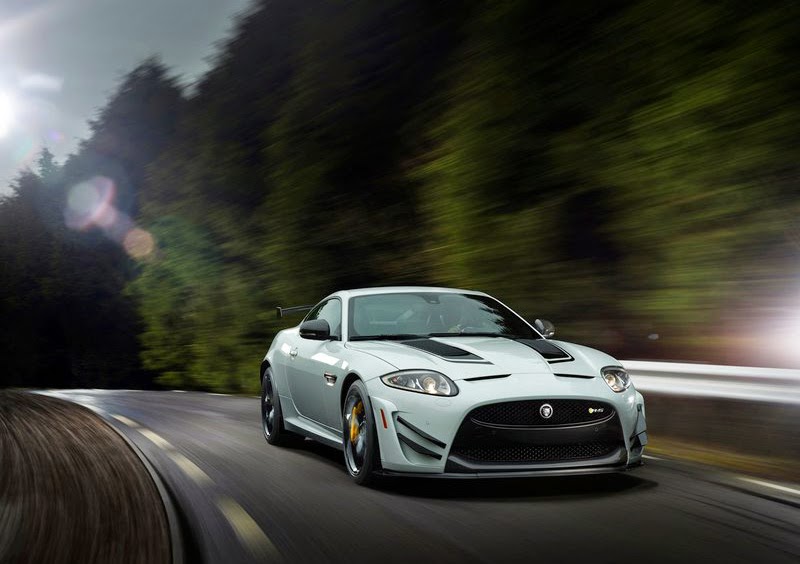
The XKR-S GT has been developed by Jaguar's ETO division to be the ultimate track-focused but road-going iteration of the XK coupe. Extensive aerodynamic and suspension changes, as well as the addition of carbon ceramic brakes, have combined to give the Jaguar XKR-S GT race-car inspired connected feel and braking performance. Initial production will be limited to just 30 cars for the North American market.

A range of bespoke carbon fibre components, including an extended front splitter, dive-planes and elevated rear wing, all work to maximise the XKR-S GT's aerodynamic downforce. Technical learning from the development of the new Jaguar F-TYPE two-seater sports car has also been applied to the XKR-S GT's suspension and steering systems, optimising both immediacy of response to driver input and agility.

Stunning performance is provided by Jaguar's proven 5.0-litre supercharged V8 engine, boasting 550PS and 680Nm, driving through a six-speed transmission and active electronic differential. Combined with the aerodynamic and suspension changes, plus revisions to the traction control system's calibration, the result in straight-line terms is a 0-60mph time of 3.9 seconds. Electronically limited top speed is 186mph (300 km/h).

The Jaguar XKR-S GT is available in Polaris White with unique graphics and Jaguar R-S GT script on its louvred bonnet. The Warm Charcoal interior - with red accents - features 16-way electrically adjustable 'Performance' seats finished in soft-grain leather and Suedecloth with the Jaguar and R-S GT scripts integrated into the backrests. Jet Suedecloth headlining and a Jet Suedecloth steering wheel, with aluminium paddle shifters, are fitted as standard. Script to the treadplates and console highlight the exclusiveness of the XKR-S GT.

Aerodynamics and chassis
The Jaguar XKR-S GT features a carbon-fibre front splitter of race-car wrap-around type; extending forward by 60mm, it starts the optimisation of airflow around, over and underneath the car. Aggressive carbon-fibre twin dive-planes and wheelarch extensions further the efficiency of airflow around the car, while below the addition of an optimised aluminium front valance serves to smooth airflow under the car as well as enhancing engine and brake cooling performance.

A rear carbon-fibre diffuser ensures the smooth exit of air from underneath the car, while the elevated rear wing - also in carbon-fibre - works in combination with the decklid mounted spoiler to maximise rear downforce. At its electronically limited top speed of 186mph, the XKR-S GT produces 145kg (320lb) of downforce.Bonnet louvres serve as a further engine cooling aid while also helping aerodynamic performance by improving the airflow through the front end of the car.

Allied to the extensive aerodynamic revisions are detailed suspension changes.
The front and rear suspension arms, uprights, wheel bearings, bushings and rear subframe are all new and draw on hardware developed for the F-TYPE. The overall set-up works to increase lateral suspension stiffness for greater precision and responsiveness.

Integral to the revised suspension system is its new spring and damper module design. The Jaguar XKR-S GT has a motorsport-derived twin spring system mated to Jaguar's Adaptive Dynamics damping system - the dampers now being ride-height adjustable. Front and rear spring rates are respectively 68% and 25% stiffer than on the XKR-S, while the damper tune is much more track-focused, providing increased levels of body control and grip.

Jaguar's Adaptive Dynamics have been specifically tuned for the XKR-S GT so that the suspension parameters change to deliver a higher level of body control with maximum traction and grip when the dynamic mode is deployed, offering optimum performance for focused track driving.

The Jaguar XKR-S GT has a front track which is 52mm wider than that of the XKR-S while the rear remains the same. The steering rack is from the F-Type, with a correspondingly faster ratio and retuned steering valve. The result is immediacy of turn-in and response to steering inputs.

The unique 20-inch forged and lightweight alloy wheels - finished in gloss black - are shod with specially developed Pirelli Corsa performance tyres (255/35 and 305/30 front/rear), giving the XKR-S GT a more muscular stance and greatly increasing its grip and stability.

Brakes
The Jaguar XKR-S GT is the first production Jaguar to be fitted with a carbon ceramic braking system.

The internally ventilated and cross-drilled lightweight brake discs measure 398mm and 380mm front/rear respectively. Combined with six-piston monoblock calipers at the front and four piston units at the rear - the yellow calipers being branded with 'Jaguar Carbon Ceramic' script - the XKR-S GT delivers race-car levels of fade-free stopping power and brake pedal feel.

Enhanced braking feel comes courtesy of the electronic Pre-Fill system. Working in conjunction with the car's DSC system, Pre-Fill pressurises the brakes every time the driver comes off the throttle pedal, resulting in a very short and consistent level of travel on the brake pedal. This maximises braking response, reduces the car's stopping distance and delivers increased levels of confidence during high performance driving.

The lightweight nature of the carbon ceramic system means a reduction in unsprung weight of 21kg - so further enhancing the XKR-S GT's handling.

Performance
Jaguar's proven all-aluminium 5.0-litre supercharged quad-cam V8 engine, boasting 550PS and 680Nm of torque, delivers not only exhilarating performance but also tremendous efficiency thanks to the technologies incorporated into it, including spray-guided direct injection (SGDI) and dual independent variable cam timing (DIVCT).

The high-pressure die-cast lightweight aluminium block is stiffened with cast-iron liners and cross-bolted main bearing caps, providing refinement to match its power. The four-valve cylinder heads are constructed from recycled aluminium, between them sitting the Roots-type twin vortex supercharger fed by two intercoolers, which feature their own water-cooling circuit to reduce the temperature of the pressurised air thereby optimising power and efficiency.

The Jaguar XKR-S GT features a fully active performance exhaust system with valves that open under load, both enhancing gas-flow and the car's aural character, while optimising power output.

Jaguar XKR-S GT Technical specification
  •     Engine: 5.0-litre V8 supercharged petrol
  •     Capacity: 5000 cc
  •     Bore/Stroke: 92.5mm (3.64") / 93mm (3.66")
  •     Peak Power: 550 PS (405 kW) @ 6000-6500 rpm
  •     Peak Torque: 680 Nm (502 lb/ft) @ 2500-5500 rpm
  •     Transmission: Six-speed automatic
  •     0-60mph: 3.9 s
  •     Top Speed: 300 km/h (186 mph) (electronically limited)

    Combined Economy
        12.3 l/100km
        23.0 EU mpg
        17 US mpg
    CO2 Emissions: 292 g/km

Monday, December 26, 2011

Jaguar XKR, 2011


The Jaguar XKR Special Edition combines a number of new features and option packs that are introduced to the XK range at 2011 Model Year. Jaguar customers have the option to personalise their vehicle by building on the existing Jaguar XKR package to deliver a car that offers even greater performance without sacrificing the refinement and luxury for which every Jaguar is renowned.

Introduced in 2009, the Jaguar XKR boasts a state-of-the-art 5.0-litre supercharged AJ-V8 Gen III R engine that delivers 510PS (510bhp SAE), 625Nm of torque and propels the coupe to 60mph in just 4.6 seconds. Now, in Special Edition guise, the Jaguar XKR's top speed climbs significantly from an electronically limited 155mph (250km/h) to 174mph (280km/h) thanks to the addition of the Speed Pack. Allied to that remarkable engine is an advanced six-speed automatic transmission with steering-wheel mounted paddles, lightweight aluminium body structure and a range of computer-controlled systems including Active Differential Control and Adaptive Dynamics that ensure the supercharged car accelerates even faster, handles even more precisely and sets new standards of ride and comfort.

The benefits of the Jaguar XKR's lightweight but stiff and strong advanced all aluminium body are already acknowledged. Not only does this architecture bring dynamic benefits thanks to its torsional rigidity, it also offers excellent safety and crash repair features and provides the ideal base to improve performance across the board - including optimised fuel economy and CO2 emissions. Thanks to the combination of excellent powertrain efficiency and the Jaguar XKR's advanced lightweight body architecture, its fuel economy is comparable to the previous generation of Jaguar XKR - despite the significant increases in power and performance.
The new 2011 Jaguar XKR Special Edition consists of two new styling and performance packs - the Speed and Black Pack. Both are available to Jaguar XKR coupe customers separately and provide new levels of styling and performance for owners looking to further personalise their Jaguar.

The Jaguar XKR Speed Pack
The Jaguar XKR with new optional Speed Pack allows customers to further strengthen their XKR's already impressive breadth of capability, by extending the car's top speed from 155mph (250km/h) to an electronically limited 174mph (280km/h), thanks to a unique engine and transmission recalibration.
Every Jaguar XKR with the Speed Pack will come with body-coloured side sills and rear diffuser, and a chrome finish to the window surrounds, upper and lower mesh grilles, side Power Vents and boot lid finisher. Red brake callipers with a Jaguar 'R' logo sit inside 20-inch Kasuga alloy wheels.

The performance potential of the supercharged AJ-V8 Gen III R engine comes courtesy of its highly advanced design. The all-aluminium four-cam power unit has a number of features that deliver power with very high efficiency, including spray-guided direct injection (SGDI), which improves performance and economy, and dual independent variable cam timing (DIVCT), which benefits performance and economy, while also reducing emissions.

The AJ-V8 engine is built around a stiff, aluminium block with cast-in iron liners and cross-bolted main bearing caps to reduce noise, vibration and harshness. The block is high pressure die-cast, providing a superior finish and greater dimensional accuracy. The engine uses aluminium heads, with four valves per cylinder and spheroidal-graphite cast-iron crankshafts and forged steel connecting rods. The cylinder heads for the first time are specified with a secondary (recycled) aluminium alloy thus reducing the environmental impact of manufacturing the new engine.

A sixth-generation, twin vortex system supercharger is fitted to the Jaguar XKR's 510PS engine. It is a compact Roots-type unit, feeding air through twin intercoolers, which in turn are water-cooled by their own discreet cooling circuit. The high helix rotor design improves the supercharger thermodynamic efficiency by more than 20 percent over its predecessor. It also improves noise quality to the point where the unit is virtually inaudible (making supercharger whine a thing of the past). The intercoolers reduce the temperature of the pressurised intake-air and so optimise power and efficiency. Mechanically, the new supercharger and its intercoolers are efficiently packaged in the 'V' of the engine to deliver a lower overall engine height in support of pedestrian safety requirements.

The charge cooling effects of the direct-injection fuel system have allowed the compression ratio of the supercharged engine to increase from 9.1:1 to 9.5:1, further optimising fuel economy. During the engine warm-up phase, the combustion system employs multiple injection mode strategies to deliver 50 percent more heat for fast catalyst warm-up and emissions reduction.

VCT units work independently on all four camshafts with 62 degrees of authority on the inlet cams and 50 degrees of authority on the exhaust cams. Timing is optimised by the engine control unit for torque, power and economy at every point in the engine's speed range. The new VCT units are capable of a response rate up to three times faster than in previous Jaguar engines, with actuation rates in excess of 150 degrees per second. This delivers a more immediate engine response to the driver's demand for power.

The Jaguar XKR Black Pack
For customers looking to create a real statement with their Jaguar XKR, the new optional Black Pack allows them to own a bold and purposeful Jaguar with undeniable visual impact thanks to menacing gloss black wheels and exterior detailing.

Like the Speed Pack, XKRs fitted with the Black Pack have a paint palette that is restricted to colours that Jaguar's Design team believe to be ideal for creating a coupe with immediate exclusivity. The Black Pack models will be available in Ultimate Black, Polaris White or Salsa Red and boast eye-catching 20-inch gloss black Kalimnos alloy wheels. Further gloss black finishing is applied to the window surrounds, front grilles and side Power Vents. Optional red painted brake callipers contrast strongly with the black alloy wheels, while body coloured front and rear spoilers and boot lid finisher round out the package. Customers also have the option to apply a sweeping 'XKR' side body graphic that runs along the door sills.

Jaguar's Design Director, Ian Callum, says the new Black Pack is a fitting addition to the Jaguar XKR: "While Jaguars are about beauty, they are also about speed and power. With the optional Black Pack you can now add a sense of drama and severity to that performance."

In addition to the Black Pack's exterior changes, the Jaguar Designers' Choice programme has also selected a range of interior trims that support the visual impact of the car. All XKRs with the Black Pack will be trimmed with Charcoal leather hides that can be personalised with a range of colour stitching and grain. Three interior finishes and veneers for the fascia and door trims are also available - Dark Oak, Dark Mesh Aluminium and Piano Black.

Whatever interior trim is selected, the Jaguar XKR's cabin is evidence of contemporary, sporting luxury, exceptional quality of craftsmanship, and Jaguar's renowned attention to detail. The interior is clean, elegant and spacious, and remains entirely in harmony with the sporting character of the revised exterior.

Jaguar XJ, 2010


Sleek, sporting and sophisticated, the all-new Jaguar XJ brings a daring new spirit to automotive luxury. It offers a seductive mix of striking design, breathtaking performance and engineering without compromise.

The new Jaguar XJ is the epitome of fluid, contemporary automotive style. The elongated teardrop shape of the side windows establishes the car's silhouette and lies at the heart of its flowing design. And the new Jaguar XJ doesn't just look streamlined: it shares a drag coefficient of 0.29 with the Jaguar XF saloon, making them the most aerodynamic Jaguars ever.

A coupé profile cloaks a cabin that offers comparable levels of space to saloons with a more conventional style. There is generous accommodation for five occupants, while long-wheelbase models provide rear-seat passengers with even greater levels of comfort thanks to an additional 125mm of rear legroom.

The exquisitely designed interior has a strong sporting character throughout. A panoramic glass roof, standard on all models, dramatically enhances the sense of light and space inside the new Jaguar XJ. And in keeping with its status as the ultimate four-door Jaguar, the XJ introduces a new generation of interior technologies, pioneering the use of display and infotainment systems such as the innovative Virtual Instrument dials and optional 1200W Bowers & Wilkins premium surround sound system.

At the heart of the all-new Jaguar XJ's construction is a next-generation application of Jaguar's unique lightweight vehicle architecture. Primarily aluminium, but also using magnesium and composite alloys, this allows Jaguar to produce a significantly lighter and stiffer body - the lightest in its class. The new structure - which retains the same aerospace-based riveting and bonding processes - has been refined using these advanced materials to deliver improved strength, enhanced refinement and superior safety performance.

The new Jaguar XJ offers the choice of four powerful and refined engines, which use the latest powertrain technology to deliver an outstanding combination of performance and class-leading efficiency. The supremely powerful supercharged 510PS 5.0-litre AJ-V8 Gen III will head the line-up, with a 0-60mph time of 4.7 secs (0-100kph in 4.9 secs); 470PS supercharged and 385PS naturally aspirated petrol V8s are also available, dependent on market.

A no-compromise diesel alternative is provided by the formidable 275PS 3.0-litre AJ-V6D Gen III. With twin sequential turbochargers, this is an engine that delivers on every aspect of the Jaguar driving experience, marrying tremendous drive (0-60mph in 6.0 secs, 0-100kph in 6.4 secs) with impressive fuel economy and CO2 emissions (40.1mpg and 184g/km of CO2).

The all-new Jaguar XJ delivers a driving experience that is just as memorable as the car's appearance. Benefitting from technologies pioneered on the exciting new Jaguar XFR and Jaguar XKR models, including continuously variable damping (Adaptive Dynamics), electronically controlled rear differential (Active Differential Control) and a quick ratio power-steering system, the new Jaguar XJ combines responsive, sporting dynamics with the refined, supple ride expected from a luxury Jaguar.

With its unique lightweight aluminium body structure and new, advanced powertrains, the all-new Jaguar XJ already has a head start when it comes to sustainable performance. The aluminium body uses more than 50 percent recycled material, with a plan to increase this to 75 percent. Body panels made from recycled material use only 5 percent of the energy required for new aluminium, equating to a potential saving of three tonnes of CO2 per vehicle.

THE CONCEPT
The all-new Jaguar XJ's distinctive lines mark the next bold evolution of Jaguar's new design language. The striking elongated teardrop shape of the side window graphic establishes the car's streamlined profile, and is balanced by a dramatic lower swage line emanating from the front wheels that reinforces the vehicle's forward stance. The new Jaguar XJ's sleek lines are complemented by a taut waistline, which further accentuates the impression of length and elegance and creates a natural tension as it fades from the front arch into the middle section of the car before reappearing as a strong haunch towards the rear.

Bold, confident face
The face of the XJ is confident, with a wide front track and short overhangs contributing to the finely judged proportions. The nose of the car follows Jaguar's new design language, with a bold and assertive treatment: the powerful mesh grille and slim xenon headlamps creating a strong road presence.

The strong, muscular lower half of the car is contrasted with the slim and graceful quality of the roofline, which takes inspiration from the original 1968 XJ saloon. The wrap-around rear screen reduces the visual weight of the pillars, and gives the impression of an exotic 'floating' roof.

And the new Jaguar XJ doesn't just look sleek and streamlined: it is, alongside the XF, the most aerodynamic Jaguar ever. The car has a drag coefficient (Cd) of 0.29, and, equally importantly, outstanding high-speed stability.

A key factor in achieving this highly efficient aerodynamic performance was the extensive use of Computational Fluid Dynamics (CFD) to refine the shape long before the car ever saw a wind tunnel. Taking the process pioneered on the XF programme to a new level of sophistication, more than 400 detailed CFD studies were performed during the initial design phase.

Every area of the new Jaguar XJ - from the outer skin to the composite undertray to the fine grille meshes of the cooling system - was optimised using this process. Key areas included the profile of the rear decklid, which was engineered to ensure that the airflow was controlled without the need for a spoiler. As well as reduced drag and impressively low wind noise, the overall shape achieves aerodynamic loads that are carefully balanced between front and rear axles to ensure optimum handling balance and high-speed stability.

Dramatic LED lights
The rear end is notable for its pure, sculpted shape, with a conscious absence of unnecessary ornamentation. The sheet metal of the rear panel retains its pure form, with a single leaping Jaguar motif making a strong, confident statement. The LED light clusters wrap stylishly over the rear wings, and feature three dramatic red, vertical strips.

Architectural interior design
The overriding impression from the interior is a sense of personal space, a feeling enhanced by the clean, simple form of the leather-wrapped instrument panel sitting low across the vehicle. At the sides of the cabin, a bold architectural wood veneer sweeps forward from the doors to meet at the front of the car, emphasising the new Jaguar XJ's powerful, dynamic character. This linear, modern use of wood helps to create a truly welcoming environment.

The panoramic glass roof has been from the outset an integral part of the design concept of the all-new Jaguar XJ. It enables a lower, more streamlined roofline, and also dramatically enhances the feeling of light and space within the car. The roof's opening mechanism slides the glass upwards and outwards, so that headroom is never compromised. A dark tint and reflective coating prevent the interior from overheating under strong sunlight, while twin electric blinds provide another level of privacy and sun screening.

THE TECHNOLOGY
In keeping with its position as the ultimate Jaguar saloon, the all-new Jaguar XJ pioneers the use of advanced new technologies, driver displays and infotainment systems that set an exciting new benchmark within its segment.

As the driver is greeted by the signature Jaguar 'handshake' - the circular knurled aluminium rotary control of the JaguarDrive Selector™ rising into the driver's palm - stylish 3D animations materialise in the virtual instrument cluster and on the central Touch-screen, giving an immediate signal that the new Jaguar XJ takes a revolutionary approach to the way information is displayed in the vehicle.

Sophisticated virtual instrumentation
There is no physical instrument cluster display in the all-new Jaguar XJ. Instead, a 12.3-inch high-definition screen, which uses sophisticated - and beautifully detailed - virtual instruments, provides all of the functions performed by traditional dials. Jaguar's designers have also taken advantage of the freedom provided by virtual instrumentation to help prioritise the most useful information as well as creating a real sense of theatre for the driver.

As the XJ starts, three virtual dials build before your eyes: the centre dial houses a speedometer, flanked on the right by a rev counter and on the left by an information window with fuel and temperature gauges.

To maximise clarity, the display employs a 'spotlight' effect to highlight the areas showing the most important information, such as the current speed or engine revs. When required - for example, if fuel is running low, or the driver is selecting a radio station - the rev counter fades away to be temporarily replaced by the required warning message or menu.

The prioritisation goes to another level when the driver who is looking for even more sporting performance and handling selects the XJ's Dynamic mode. In this case, the dials assume a sporting red hue and feature a bold gear position indicator which glows red as you reach the rev limiter.

Jaguar XFR, 2010


The enhanced exterior styling of the Jaguar XFR moves those sporting credentials on even further, to deliver the ultimate expression of Jaguar's new saloon car design language - carrying a number of visual design cues that are intrinsic to Jaguar's 'R' car philosophy. Its unique front-end design has a larger lower grille with new black-finished mesh, plus chrome outboard air intakes. The upper mesh grille retains XF's bright finish, while the bonnet carries distinctive louvres, like those on the XKR sports car.

The Jaguar XFR also features bold new sill extensions, while the rear bumper adds a unique body-coloured lower valance panel incorporating the 'R' signature of four large, bright-finished tail pipes. The new bootlid spoiler has a significant aerodynamic effect. Developed in conjunction with the new front bumper design, it further improves the Jaguar XFR's front/rear lift balance, and therefore its high-speed stability. A new exterior mirror design also offers aerodynamic improvements, plus improved functionality with its LED side repeaters.

The Jaguar XFR's sporting character is clearly apparent in the 20-inch Nevis alloy wheels. It is the only car in its class to offer this size of wheel as standard specification. Those twin-seven-spoke wheels bear the wording 'Jaguar Supercharged' embossed around their centres, and are wrapped tightly around silver-grey brake callipers, which carry the evocative 'R' logo. The R badge also appears on the right-hand side of the boot lid drop panel, to complete the XFR's external visual identity.

The new Jaguar XFR is offered with a select palette of just eight exterior colours: Ultimate Black, Indigo, Liquid Silver, Lunar Grey, Porcelain, Botanical Green, Kyanite Blue and Salsa. All except Salsa and Porcelain are metallic colours and, within the XF range, Salsa and Kyanite Blue are unique to Jaguar XFR. For each colour - as across the entire XF range - Jaguar suggests a 'Designer's Choice' of the leather trim colours that best complement each body colour and the Warm Charcoal upper facia that is standard on every Jaguar XFR.

The interior design theme is modern and individual. The cabin environment is uniquely Jaguar and in the XFR more details hint at the car's performance. A full soft grain leather interior is standard, with four colour choices - Warm Charcoal, Warm Charcoal/Red Zone, Warm Charcoal/London Tan, and Ivory. A new Dark Oak veneer is the standard finish for the Jaguar XFR's wood-trimmed areas. New 18x14-way adjustable sports seats have electrically adjustable squab bolsters for significantly improved support at higher cornering speeds. Each Jaguar XFR seat has the 'R' logo embossed on its squab and the front seats have leather seat-back map pockets.

The fascia introduces a unique, dark mesh aluminium finish, and another discreet 'R' badge on the passenger side of the instrument panel. The speedometer and tachometer have the unique sporting signature of red dial pointers, and carry the 'Supercharged' motif. And at start-up, the 'R' logo appears on the Touch-screen as part of the XFR 'driver handshake' sequence.

The most advanced Jaguar V8 engines ever
The supercharged 5.0-litre V8 that powers the new XFR is Jaguar's new flagship engine, but it is only half of the petrol engine story - a naturally-aspirated version of the all-new engine brings additional advanced technologies and performance to other models in the XF range.

Light, robust and very strong
The all-new 5.0-litre V8 petrol engines are built around a stiff, all-new, aluminium block with cast-in iron liners and cross-bolted main bearing caps to reduce noise, vibration and harshness. For the first time at Jaguar the blocks are high-pressure die-cast, providing a superior finish and greater dimensional accuracy. The engines use aluminium heads, with four valves per cylinder and strong, spheroidal-graphite cast-iron crankshafts and forged steel connecting rods. The cylinder heads for the first time are specified with a secondary (recycled) aluminium alloy, reducing the environmental impact of manufacturing the new engine.

The new 5.0-litre V8 engines are more compact than their predecessors. Overall engine length has been reduced by 24mm by relocation of the oil pump within the engine architecture. This length reduction improves engine bay packaging in support of enhanced safety cell performance while ensuring overall engine weight is virtually unchanged.

Direct injection - power with economy
One of the key features of the new petrol engines is an industry-first, centrally-mounted, multi-hole, spray-guided fuel injection system, delivering fuel at a pressure of up to 150bar directly to the cylinder. This substantially contributes to improved low-speed, dynamic response. The positioning of the injectors ensures fuel is precisely delivered to the centre of the combustion chamber, maximising air-fuel mixing, and improving combustion control. Fuel is delivered via twin, high-pressure fuel pumps that are driven via an auxiliary shaft in the all-new engine block.

The charge-cooling effects of the direct-injection fuel system have allowed the compression ratio of the naturally aspirated engine to be raised to 11.5:1, further improving the engine economy. The supercharged engine also benefits from an increase from 9.1:1 on the previous 4.2-litre version to 9.5:1.

During the engine warm-up phase, the combustion system employs multiple injection mode strategies to deliver 50 percent more heat for fast catalyst warm-up and substantially reduced emissions.

Torque-actuated Variable Camshaft Timing improves efficiency
A new type of variable camshaft timing system (VCT) introduces another new technology. The four VCT units are activated by the positive and negative torques generated by opening and closing the intake and exhaust valves, instead of by oil pressure. This has allowed the engine oil pump to be reduced in size, saving energy and reducing fuel consumption.

VCT units work independently on all four camshafts with 62 degrees of authority on the inlet cams and 50 degrees of authority on the exhaust cams. Timing is optimised by the engine control unit for torque, power and economy at every point in the engine's speed range.

The response rate of the new VCT units is up to three times faster than before, with actuation rates in excess of 150 degrees per second. This delivers a more immediate engine response to the driver's demand.

The naturally aspirated engine is also equipped with camshaft profile switching (CPS) on the inlet camshaft. Depending on the engine's running conditions and the demands of the driver, the CPS will switch between a profile that is ideal for low-speed driving, and another which gives increased valve lift for high performance.

Jaguar XF, 2010


The new Jaguar XF is already acclaimed as a key element in the revitalization of the Jaguar brand, with its new generation of beautiful fast cars. But now the car that defines Jaguar sporting luxury is even better, with major powertrain changes and a wider range of models - including a stunning new, supercharged Jaguar XFR.

The 2010 model year Jaguar XF features all-new 5.0-liter direct-injection V8 engines. There are also significant trim and specification changes - including many new features unique to the new XFR - and the introduction of a new Portfolio derivative.

The Jaguar XF was soon recognized as a dramatic expression of a bold new Jaguar design language. It also soon became apparent that here was a car where the driving experience exceeded the expectations created by the striking appearance. Now, the new XFR takes this driving experience to new levels, shifting the balance even further towards dynamic performance while still retaining the Jaguar XF's core values as a refined and luxurious sports sedan. Power comes from an all-new 5.0-liter direct-injection supercharged V8 engine delivering 510bhp and 461lb-ft of torque. Immediately recognizable thanks to unique new 20-inch wheels, a new front end design with revised chrome air intakes, 'Supercharged' hood louvres, four polished exhaust tailpipes, an aerodynamically functional rear spoiler and side sills, the new XFR also sports discreet 'R' badging.

The attributes that marked out the Jaguar XF at launch are still very much new and in the public eye. The four-door XF has the visual excitement of a coupe, but room inside for five adults to enjoy an interior wholly contemporary in style yet uniquely Jaguar.

Simplicity and clever use of space are key to the Jaguar XF's interior design and this is unchanged in the new generation. For the driver, this is centered on the compact packaging of the JaguarDrive Selector™ transmission interface. The beautiful cast alloy Selector has already gained recognition for its part in the distinctive XF 'welcoming handshake'; a sequence in which the illuminated stop/start button pulsates like a heartbeat until pressed, when the JaguarDrive Selector™ rises into the driver's hand and the rotating fascia vents silently open.

Features such as this have already attracted more than 30,000 customers to the new Jaguar XF - and now, in many instances, they have been enhanced even further. The combination of aluminum dashboard, satin or gloss wood veneers, tailored instrument and door panels with twin-needle stitching as standard, plus Phosphor Blue halo illumination and interior mood lighting, set the Jaguar XF's cabin as far apart from its competitors as its exterior styling.

The new engines are Jaguar's most efficient ever, and they deliver power and performance at a higher level across the board. In the case of the supercharged engine, compared to the 4.2-liter V8, power has increased by a remarkable 23 percent and torque by 12 percent.

The result in the new Jaguar XFR is a 0-60mph sprint time of just 4.7 seconds (0-100kph in 4.9 seconds). More relevant in everyday driving, an excellent indicator of XFR's great flexibility is the time it takes to accelerate from 50-70mph - just 1.9 seconds.

The comparisons for the naturally aspirated engine are equally impressive. Power is increased by 29 percent and torque by 25 percent. The benchmark 0-60mph acceleration time is 5.5 seconds (0-100kph in 5.7 seconds) - some 0.8 seconds quicker than the 4.2 Jaguar XF. Better still, these improvements are achieved without hindering fuel economy and emissions performance. The new engines meet US ULEV II/Tier 2 Bin 5 emissions regulations.

Jaguar XF, 2009


The new Jaguar XF: a dramatic expression of a bold new Jaguar design language, with a driving experience that exceeds expectations created by the striking appearance: relaxed and confident, with outstanding ability and control.

DESIGN - EXTERIOR
The defining element of the new Jaguar XF as a true sporting Jaguar is its visual strength. Driven by a bold new design language, the Jaguar XF firmly emphasises contemporary and emotional themes while remaining unmistakeably a Jaguar. Targeting leadership in exterior and interior design, the Jaguar XF builds on already high standards of craftsmanship, quality and dynamic refinement, while improving packaging and aerodynamics even further.

The new Jaguar XF enters the range in the niche previously occupied by much-loved mid-sized Jaguar saloons such as the original XJ Series 1 (a car that was smaller than today's XJ). But unlike many D/E segment premium saloons, the new Jaguar XF pushes boundaries away from the 'three box' style and creates a four-door, five-seat saloon with strong, coupe-like lines. Jaguar's new design language, which debuted with the new XK sports car, is applied to a saloon car for the first time in XF. The visual step forwards is as significant as it is obvious - the Jaguar XF's proportions, for example, are so closely matched to those of the XK that the screen rake angles are the same on both cars.

Having the space and practicality of full five-seat accommodation was a programme imperative, so the Jaguar XF is proportioned to provide interior space and levels of comfort that challenge for best-in-class honours. At 4961mm long and 1877mm wide, on a lengthy 2909mm wheelbase, the Jaguar XF is 45mm longer and 25mm wider than its nearest 'dimensional' competitor, the Audi A6 - with even greater advantages over the BMW 5-Series, Lexus GS300 and Mercedes-Benz E-Class.

The Jaguar XF's visual emphasis is sporty, muscular and dynamic - a character defined by a sweeping silhouette inspired by the XK, a powerful grille, dramatic side window graphics and, of course, strong Jaguar 'shoulders'. The look, however, does not come at the expense of efficient packaging. The Jaguar XF's waistline rises to meet the roof rather than the roof coming down to meet the waist, which improves interior space. This rising waistline gives the Jaguar XF a higher tail than any previous Jaguar, providing the twin benefits of much improved aerodynamic performance, together with substantially increased luggage volume. At a maximum of 540 litres (500 with a spare wheel) the Jaguar XF's boot is the equal of anything in the class and betters most rivals.

The Jaguar XF's Jaguar character is defined by its face - centred around a bold intake grille which provides a focal point for the feature lines which stream back over the bonnet and cabin, it has inherent visual strength. The grille's mesh pattern is itself an important element of external jewellery, the woven pattern an emotional design signature that is quintessentially British, with strong sporting connotations.

The headlamps further emphasise the way in which Jaguar's design language has progressed. The one-piece clusters have a wide aspect ratio and wrap around the corners of the body onto the front wings. Closer inspection of the headlamp internals reveals twin round elements incorporated within the overall shape; a subliminal reminder of the Jaguar saloon 'quad lamp' signature.

The exterior details of the Jaguar XF have been designed as if they are finely crafted items of exquisite jewellery. The distinctive bright aluminium finisher around the side window, for example, is unusual in being a single-piece pressing and is an unmatched piece of craftsmanship. The side power vents have the Jaguar name embossed on an 'ingot' bar across the centre, while the 'venturi' shape below the tail - which hints at the Jaguar XF's sophisticated aerodynamics - is positioned above large, stylised twin chrome tailpipes.

The Jaguar XF is unmistakably a Jaguar and its badging unequivocally identifies it as such: a large 'growler' badge is prominent on the front grille, while adding the Jaguar 'leaper' to the rear boot lid is an emotional statement - a powerful signature that customers associate strongly with the most sporting Jaguars.

From launch, the Jaguar XF offers three trim levels: Luxury, Premium Luxury and SV8. Externally, with the exception of wheel styles and a badge on the SV8, all cars will look the same - a customer is buying an XF, rather than an XF in a particular trim level.

AERODYNAMICS
As well as facilitating packaging excellence, the Jaguar XF's new design language has another significant functional advantage: for the first time on any Jaguar, the entire body was developed using Computational Fluid Dynamics (CFD) before the car ever saw a wind tunnel. Every area from the outer skin to the lightweight, composite undertray to the cooling airflow (even the shape of the exterior mirrors) was optimised using this process. The higher, squarer tail is more efficient aerodynamically than a lower, rounded one, and the Jaguar XF's coupe-like roofline and subtle, raised bootlid lip improve airflow over the rear of the car. As a result, the Jaguar XF has the best aerodynamic performance, in terms of drag, of any production Jaguar ever and is better than the race-bred, limited edition XJ220 supercar.

The Jaguar XF's drag coefficient is just 0.29 and the front-to-rear lift balance is precisely zero. This aerodynamic performance contributes to impressively low wind noise, aids fuel consumption and strong high-speed stability and, of course, is vital in ensuring ideal handling balance through optimising drag and lift forces.

DESIGN - INTERIOR
Relax inside the Jaguar XF and you are in a very special place indeed. There is space - more than many will imagine given the Jaguar XF's sports saloon design - but also the sense of being in a perfectly proportioned, agile car. There is also comfort - of course - but it is the craftsmanship, materials and attention to detail that impress. Consider, too, the generous equipment specification - the features that empower rather than overpower the driver - and the strengths of the Jaguar XF are readily apparent.

The interior design maximises the feeling of space, with driver and passenger seating positions, the relationship of seats to window areas, and the volume and versatility of stowage options all contributing. New thinking on seat design - the front seats are deliberately sculpted and reduced in size (but not comfort) - liberates space and makes access easier, too. The increased track and best-in-class rear seat width means tall adults can sit in complete comfort. And while the Jaguar XF roofline might say 'coupe', the rear headroom says 'saloon' better than many rivals.

Just as the Jaguar XF's exterior defines a new design direction, its interior moves from traditional themes to contemporary, sporting luxury - emphasised by 'surprise and delight' features such as the JaguarDrive SelectorTM and the rotating vents; through the use of sophisticated new materials; and by all-new graphics and interior lighting systems.

The line defined by the soft-trimmed dashboard top and aluminium finisher runs continuously through the front and rear doors, making the interior feel more spacious, and especially making it seem wider from the front seats.

With the JaguarDrive SelectorTM, automatic transmission functions are selected simply by turning the control with the fingertips. As an example, Drive to Drive Sport selection is accomplished with a simple push and turn action. Returning from S to D, the rotary control operates with spring-assistance, which eliminates the need to pull the Selector. It couldn't be simpler.

Phosphor blue mood or 'halo' lighting echoes the ambience you might find in a favourite contemporary bar or restaurant. This same lighting technology is also used in MP3 players and mobile 'phone handsets to illuminate keypads and controls. On the Jaguar XF, halo illumination around the switch panels and JaguarDrive SelectorTM console, the start-stop button and Electric Parking Brake gives a soft glow that indicates their positions without distracting the driver.

Mood lighting is also incorporated into the header console, bathing the centre console in a cool blue light, while lights under the front door releases softly illuminate the door-mounted switches.

Soft, phosphor blue illumination is also used on the instrument dials, highlighting the sporting feel of the aluminium-coloured dials. As well as being soothing, blue does not conflict with any of the green, yellow or red alert or warning signals on the car.

To say that luxury comes as standard on the Jaguar XF is an understatement. Front seats are electrically adjustable, with a minimum of eight-way seat adjustment for the driver and front passenger, while the SV8 offers 16-way driver's seat and 12-way passenger's seat adjustment with 4-way power lumbar and cushion length adjustment for the driver. The new Jaguar XF also introduces the option of active heated and cooled ventilated front seats, with fan-assisted whole seat heating, whole seat cooling, or just squab heating or cooling. And because the Jaguar XF cleverly separates seat and cabin temperature controls, it gives the option of a warm cabin with a cool seat, or vice versa. And all of this with a new climate control system that is also the most efficient Jaguar has ever offered.

SUSPENSION
The Jaguar XF's class-leading torsional rigidity has significant benefits for refinement and provides the perfect platform for a suspension system that is a further development of the Jaguar XK sports car, and delivers a ride/handling balance and steering characteristics absolutely in line with the Jaguar XF's sporting looks. Unequal length wishbone front suspension with weight-saving aluminium components, and multi-link rear suspension are both subframe mounted for maximum control, including excellent straight-line stability and strong anti-dive characteristics under heavy braking, with minimum road noise and vibration.

POWERTRAIN
The new Jaguar XF will be available with a choice of four engines - 2.7-litre V6 turbodiesel, 3.0-litre V6 petrol, 4.2-litre naturally aspirated V8 petrol, and 4.2-litre supercharged V8 petrol (depending on market). Both petrol and diesel V6 engines are offered in Luxury and Premium Luxury models; the naturally aspirated V8 will be Premium Luxury only (and Luxury for US models) and the supercharged SV8 has its own unique specification, for a very logical, easily understood range with only six major variants.

The Euro IV compliant twin-turbocharged 2.7-litre 24-valve V6 diesel delivers high efficiency, high performance and class-leading refinement - its headline figures including 207PS (EEC) and 435Nm (EEC) of torque. With its Compacted Graphite Iron (CGI) cylinder block and aluminium cylinder heads it is the lightest diesel engine of its type and size - making a significant contribution to the new Jaguar XF's power-to-weight ratio, performance and fuel economy.

The V6 diesel features the latest generation high-pressure Common Rail direct-injection, 'multiple pilot' injection, and piezo-electric injection control, allowing sophisticated management of the injection patterns to make combustion smoother and quieter. Four valves per cylinder and advanced combustion chamber shapes contribute to high combustion efficiency with low combustion noise, alongside very low mechanical noise levels.

Emissions are further reduced by using twin variable-geometry turbochargers with electronic control, exhaust gas recirculation, and a variable-swirl intake system. Using two small turbochargers, with 'drive-by-wire' throttle control, rather than one larger unit, also gives a quicker, smoother response.

The 3.0-litre V6 petrol engine is another compact, lightweight, all-aluminium design with four overhead camshafts, four valves per cylinder, VCP Continuously Variable Cam Phasing and variable geometry air intakes. It produces 240bhp (SAE)/238PS (EEC) and 221lb ft (SAE)/293Nm (EEC) peak torque - with more than 80 percent of peak torque from below 1500rpm to maximum engine speed at 6800rpm.

Variable Camshaft Phasing produces faster response and performance at all engine speeds - with more torque at low speeds and maximum power at high speeds. It also provides internal exhaust gas recirculation, reducing both hydrocarbon and NOx emissions.

The 4.2-litre V8 comes in naturally aspirated or supercharged versions. With a ribbed aluminium block and cylinder heads it is very light but extremely strong, and its superb structural stiffness minimises radiated engine noise and increases mechanical reliability. The V8's exhaust system has also been completely retuned to remain quiet at cruising speeds but deliver a substantially more purposeful V8 roar under hard acceleration.

In naturally aspirated form it develops 300bhp (SAE)/298PS (EEC), and 310lb ft (SAE)/411Nm (EEC) of torque. The supercharged version uses a highly efficient rotor-type supercharger, belt-driven from the crankshaft. It develops 420bhp (SAE)/416PS (EEC), and 413lb ft (SAE)/560Nm (EEC) of torque from low engine speeds. Just as important as the supercharged engine's peak torque is the way the usable torque is spread across a wide rev range - with at least 86 percent of the peak from 2000rpm to maximum engine speed.

A superior six-speed automatic transmission - renowned as one of the best in the world and already proven in other Jaguars - is used on all versions of the new Jaguar XF. There is no manual gearbox option. The transmission is a key element in the Jaguar XF's sporting character, its adaptive gear-changing strategies responding both to road conditions and the way the car is being driven, giving the smoothest shifts and optimum performance. Adding another layer of driver focus, the transmission is controlled by the new JaguarDrive SelectorTM with the option of manual selection through Jaguar Sequential ShiftTM. The JaguarDrive SelectorTM is also used to access the Jaguar XF's Sport mode which uses shift-by-wire technology pioneered on the XK.

Jaguar XKR-S, 2009


The Jaguar XKR-S coupe is the fastest production XK to date. Powered by Jaguar's acclaimed 4.2litre V8 supercharged engine, it has been developed for the true Jaguar enthusiast. It is faster and more agile than the XKR, taking the Jaguar sports car experience to a new level, whilst retaining the refined, dynamic excellence and crafted luxury that is unique to Jaguar.

Sharing the XKR's highly advanced lightweight aluminium body architecture, the high performance of the Jaguar XKR-S is made totally accessible by the enormous reserves of the 4.2-litre all aluminium four-cam supercharged V8's 420bhp (SAE) and 560Nm of torque.

With recalibrated engine management, the Jaguar XKR-S reaches an electronically limited top speed of 174mph (280kph) - 19mph (30kph) faster than the XKR. This additional performance is made accessible by improved aerodynamics (reduced drag and lift) and unique suspension set-up.

Sharing the XKR's class-leading six-speed sequential automatic transmission, the Jaguar XKR-S has exceptional refinement and the option of ultra-fast manual shifts controlled by steering wheel-mounted paddle shifts - with shift times measured in milliseconds to make this one of the fastest shifting transmissions in the world.

To match its increased performance, the Jaguar XKR-S adopts the most powerful brakes on any Jaguar production model, plus extensive changes to its suspension and steering to provide further enhanced ride and handling characteristics without compromising comfort.

The high performance braking system for the Jaguar XKR-S was developed by Jaguar's Special Vehicles team in partnership with British competition brake specialist Alcon, which supplies the stopping power for some of the fastest cars in the world, on both road and track. The brakes were perfected over thousands of miles of testing on some of Europe's most demanding roads, and by Jaguar's engineering team at the Nurburgring in Germany. The Jaguar XKR-S Alcon R Performance braking system features 400mm diameter discs on the front and 350mm discs at the rear. Each disc is radially ventilated for maximum cooling and to resist fade even under the hardest use, and will perfectly match the Jaguar XKR-S's increased top speed. The friction surfaces of each disc carry a series of crescent-shaped grooves that help clear water from the discs during wet weather and help to keep the brake pads clean at all times. The Alcon R performance brake package uses lightweight monobloc six-piston callipers at the front and four-piston callipers at the rear - each calliper finished in a distinctive red and carrying the R logo.

The Jaguar XKR-S coupe's dynamic balance focuses on achieving an even more sporting character while retaining the XKR's supple ride comfort. Its blend of control and refinement begins with the extremely stiff all-aluminium body structure, and a re-tuning of the XKR's all-wishbone suspension. The Jaguar XKR-S features new springs, new anti-roll bars and unique dampers. All the major suspension parameters are recalibrated, and the Jaguar XKR-S uses Jaguar's proven Computer Active Technology Suspension (CATS) with unique tuning. It also uses a faster ratio steering rack, for quicker reactions and optimum feel.

The limited edition coupé in Ultimate Black is identified by the unique Jaguar XKR-S badge on the rear of the car. The exterior of the Jaguar XKR-S has been subtly enhanced to make it recognisably different without being overstated. Another significant element in the revised handling package is that the ride height of the Jaguar XKR-S has been reduced by 10mm compared with that of the XKR, and the Jaguar XKR-S sits on unique, lightweight 20-inch Vortex forged alloy wheels with bespoke tyres. That naturally makes the Jaguar XKR-S look lower and even more sporting, but it has a number of other distinguishing details. It features a new front aerodynamic splitter, side sill extensions, revised rear spoiler and rear diffuser panel, with contrasting finishes to details such as the front mesh grille, power vents, sills and rear diffuser panel.

The Jaguar XKR-S has an Active Exhaust System, which is specifically tuned to ensure quiet, refined high-speed cruising while producing a much more hard-edged and sporting V8 sound under hard acceleration - not over loud, but full of performance character.

While the mechanical specification and the exterior revisions are driven largely by performance and dynamic enhancement, the interior changes reflect Jaguar's vision of the Jaguar XKR-S as an uncompromisingly luxurious sports car.

The full soft grain leather trim is finished in Charcoal with Ivory twin-needle contrast stitching, with leather wrapping the seats, instrument panel top, centre console, inner door panels and rear side panels. This is complemented by Piano Black veneer, Charcoal Alston luxury headlining, plus a revised instrument cluster - calibrated to accommodate the higher top speed - with XKR-S branding. The contrast-stitched leather trimmed steering wheel, alloy and leather gear selector with alloy surround, bright aluminium pedals, and XKR-S branded head-restraints, tread-plates and carpet mats further set the tone for this very special interior.