Showing posts with label Maserati. Show all posts

Sunday, March 15, 2015

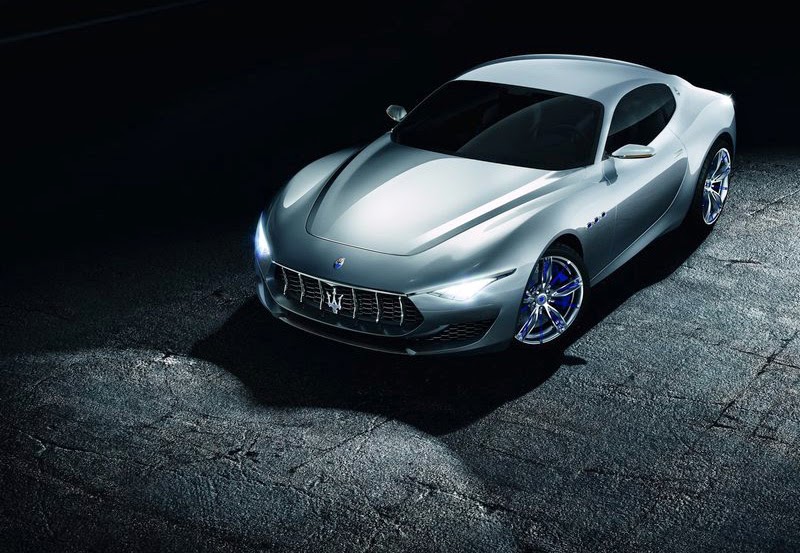
Maserati Alfieri Concept, 2014

Maserati Alfieri Concept, 2014, Indo Automobiles, Cars Concept, Luxury Automobile
 Maserati Alfieri Concept, 2014, Indo Automobiles, Cars Concept, Luxury Automobile Maserati Alfieri Concept, 2014, Indo Automobiles, Cars Concept, Luxury Automobile
 Maserati Alfieri Concept, 2014, Indo Automobiles, Cars Concept, Luxury Automobile Maserati Alfieri Concept, 2014, Indo Automobiles, Cars Concept, Luxury Automobile
 Maserati Alfieri Concept, 2014


Maserati unveiled the Alfieri, a 2+2 concept car to celebrate the brand's centenary at the 2014 Geneva Motor Show. The Alfieri is an exciting but realistic and 100% functional prototype that says much about the design DNA of future Maseratis; it could well be a door to the future of the Trident Marque.
The striking new concept bears the name of Alfieri, the most prominent of the Maserati brothers and the engineering genius who founded "Officine Alfieri Maserati" in Bologna a century ago. The Alfieri was created at the Maserati Centro Stile in Turin by a group of talented young designers, under the direction of Marco Tencone overseen by Lorenzo Ramaciotti.

The Design
The Alfieri is being unveiled at just the right time to re-establish Maserati's orientation in terms of design and production. If the new Quattroporte and Ghibli gave the impression that Maserati was becoming oriented towards sporty, premium four door saloons, the Alfieri concept is a reminder that the brand has a remarkable racing heritage and a unique tradition in exotic GT cars.
The development process kicked off last summer When the designers were asked to start from a blank sheet to create a concept for Maserati's centenary. Among various proposals, the sketches that would lead to what is now the Alfieri emerged.

The Maserati A6 GCS-53 designed by Pininfarina in 1954, proved a valuable source of inspiration for the designers. Far more than a rare racing machine for gentlemen drivers, the A6 GCS-53 was a masterpiece of design. It was also the last car that, at that time, the Carrozzeria Pinin Farina designed on a Maserati model before making a comeback in the first decade of the 21st century with the Quattroporte and the GranTurismo.

The A6 GCS-53 was an iconic piece of automotive technology and simply breath-taking for its proportions and design features: a diminutive cabin positioned almost over the rear wheels, a seemingly endless bonnet and long, sinuous wings stretching nearly to the rear wheels.

The Alfieri is obviously much more than a futuristic interpretation of the A6 GCS-53. Maserati has a diversified design history that encourages designers to look forward rather than back: "We wanted the Alfieri to test future design paths", Ramaciotti explains. "The car is very aggressive yet subtle in style, forceful but understated."

The acronym A6 GCS stood for Alfieri 6 cylinder, Ghisa, Corsa, Sport, epithets that characterise its long bonnet and rear-set 2 seat cabin.

While the inverted A pillars of the A6 GCS-53 were not adopted in the new Alfieri, their optical effect has been recreated by a sculptured line that starts from the bonnet and fades to the upper part of the doors, making the windscreen look larger.

The long, low nose is a stylistic evolution from contemporary Maserati models. The grille is divided vertically into two concave sections that seem to float in the air. The led DRLs are connected by a clear decorative line with a stylistic element in the centre. The aggressive headlights incorporate bi-xenon-LED bulbs and are rendered distinctive by a characteristic brow. The same decorative element is repeated on the twin exhaust tail pipes.

The tail lights are three dimensional with red external elements and white elements in the centre. Their shape harmoniously follows the rear shoulder of the car and complements the air ducts underneath to create an impressive, racing style rear view.

The Alfieri's designers have developed a streamlined, uncluttered form where the only decorative elements - the restyled triple air ducts on the wheel arches - are finely integrated. This eye-catching silhouette almost entices you to caress it.

The wheels have been specially designed for the Alfieri concept. Forged from single aluminium elements, the 21" diameter rear and 20" front wheels feature integrated decorative spokes that are reminiscent of the classic spoke wheels of the 1950s.

Though form is the dominant element, colour and detail play a complementary role. A liquid metal colour called "Steel Flair" has been chosen for this Maserati 100th anniversary concept. This choice of finish gives the Alfieri's elegant shape a refined, technical and contemporary look, as if a metallic veil has been draped over a naked body.

The decorative spokes of the forged wheels, brake callipers, grille, iconic triple air ducts, rear diffuser and the provocative brow of the exhaust tail pipes are all finished in Maserati Blue. In the same blue is the Alfieri signature, replicated from an old official Maserati document and sculpted on the rear of the car, in the number plate recess. The front bumper spoiler and rear diffuser are in carbon fibre with aluminium inserts.

Minimalist interior
In the 2+2 seat cabin, the design team have created a study in simplicity and minimalism. The suspended dashboard is conceptually inspired by that of the Maserati 5000 GT. The dashboard boasts a clean, organic, two-tone design built around a central TFT screen.

The instrument panel has a classic layout with two binnacle dials with two smaller ones in between. The edge of each is embellished with a small "Officine Maserati" label.

Rather than analogue binnacle dials, the instrument panel features TFT displays inspired by modern photographic camera menus in the way they indicate km/h and engine rpm. Instead of a rotating indicator, the numbers themselves rotate around the clocks. Current speed and RPM are highlighted by a magnifying glass effect.
There is even a touch of racing spirit inside the Alfieri. The floor is finished in a material that imitates oxidised steel, a material commonly found on racing cars of the 1950s.

Luna white and dark Basalt blue are the dominant colours inside the airy Alfieri cockpit. Aniline leather with a natural look and feel covers the seats, dashboard and central console. Copper subtly highlights the main lines that characterise the car and brings a retro feeling to an otherwise futuristic environment.

The interior has a classic 2+2 layout with an open space luggage compartment. The rear seat backrests have a unique, elongated design. Well visible from the outside, they add a sense of speed to the interior. The rear seats tilt forwards through 90 degrees and also serve as luggage bulkheads.

The seat profile inserts, gearbox lever and oval clock on the central console are milled from single piece aluminium billets, hand finished and anodised in a natural copper colour. All other aluminium components, including the pedals, gearbox paddles and steering wheel spokes are also hand finished and anodised in a palladium colour.

The passenger seats, though inspired by the racing bucket seats of the '50s, look futuristic and have a modern structure with semi-integrated headrests and an arched profile that serves as main structural element.

The three-spoke steering wheel and the deep central crown form a three dimensional sculpture that seems to have been crafted in the workshop of an Italian artisan. Like the remainder of the Alfieri's interior, it too is 100% handmade.
The oval clock with red-blue back plate incorporates two sub-dials and is obviously inspired by a classic chronograph.

Sporting DNA
The Alfieri is based on the GranTurismo MC Stradale chassis with a 24 centimetre shorter wheelbase, giving it the proportions of a genuine supercar. Alfieri is 4,590mm long with a 2,700mm wheelbase, 1,930mm wide and 1,280mm high.

Under the sleek body lies the transaxle platform of the Maserati GranTurismo. This 4.7 litre, naturally aspirated, V8 engine from Maranello develops 460bhp at 7,000rpm and 520Nm at 4,750rpm and gives the Alfieria real driving force. Thanks to a special exhaust layout, this thoroughbred V8 also produces a breath-taking sound.

A six-speed, electro-actuated gearbox (MC Shift) is mounted in a single unit with the limited slip rear differential and connected to the engine via a rigid torque tube. The transaxle layout gives the Alfieri an optimised front-rear weight distribution with a slight predominance to the rear axle.

Thursday, January 23, 2014

Maserati Ghibli, 2014


  •  Maserati Ghibli, 2014

The all-new Maserati Ghibli marks a turning point in Maserati's history. Unveiled at the 2013 Shanghai Motor Show and arriving just months after the new Quattroporte, the Ghibli gives Maserati two four-door saloon models for the first time in its history.

The Maserati Ghibli is smaller, shorter, lighter, more dynamic, less expensive and more economical than the flagship Quattroporte and provides a cornerstone in Maserati's plans to build 50,000 cars a year by 2015.

Its petrol range provides high performance from both of the power outputs from the Twin Turbo-charged, 3.0-litre V6 petrol engines.

The Maserati Ghibli has a more-focused, sportier philosophy than the larger Quattroporte and its most powerful model, the Ghibli S, has 301 kW (410 hp) of power, races to 62mph in 5.0 seconds and stretches out to a top speed of 177mph (285km/h).

The Maserati Ghibli is also the first Maserati in history to be powered by a diesel engine, with a turbo-diesel V6 producing all the sound, refinement and driving pleasure typical of Maserati while delivering fuel consumption over 47mpg (below 6 l/100km) on the NEDC combined cycle . The Ghibli diesel will also become the first Maserati with Start-Stop technology.

It shares much of its core architecture, including its crash safety, chassis, suspension architecture, engines and LED headlight technology, with the larger Quattroporte, though it is 50 kg lighter, 173 mm shorter in the wheel base and 291 mm shorter overall.

The Maserati Ghibli's design team was challenged to produce a saloon that emphasised its more dynamic driving characteristics through a more aggressive visual personality, yet still maintained discernible visual links with the Quattroporte.

The outline of the body reflects a coupe-like philosophy for the four-door saloon, while there are strong feline hints around the Ghibli's grille and headlights. The grille takes its inspiration from the current GranTurismo and it can draw a line back to the classic 1950s A6 GCS.

It also maintains Maserati's distinctive C-pillar treatment, which delivers much of the coupe-like stance and carries the classical Saetta Maserati logo, carrying on a tradition dating back to 1963.

The side profile is dominated by a swage line that runs from the traditional Maserati grille vents behind the front wheels and finishes in the rear lights themselves.

Inside, the Ghibli sets itself apart from the Quattroporte with a unique dashboard design that perfectly matches its sportier and more youthful character without losing any of the luxury expected from Maserati. The Ghibli also delivers a sporty design combined with all the spaciousness expected in an executive saloon from Maserati.

The Maserati Ghibli, Ghibli S and Ghibli Diesel all utilise an eight-speed automatic transmission to deliver their performance, providing seamless comfort with fast gear shifting for hard acceleration.

All Ghibli models deliver exquisite handling thanks to their perfectly balanced weight distribution, a double-wishbone front suspension and a state-of-the-art five-link rear suspension. It can now deliver the added security and all-weather assurance of all-wheel drive as well.

It also delivers new standards in quality in every area from design, development, fabrication and process controls. It is produced in a new plant that combines Maserati's traditions of craftsmanship with cutting-edge technologies that are able to guarantee outstanding quality by controlling even the tiniest of details.

The Maserati Ghibli has entered the E-segment sports premium market with a marked advantage in cabin craftsmanship and detailing, offering luxury features like the Maserati Touch Control screen, reversing camera, Poltrona Frau leather interior and the 15-speaker Bowers & Wilkins audio system, as well as WLAN-based WiFi and compatibility with most modern mobile phone systems.

The original 1963 Quattroporte invented the concept of the luxury sports saloon, the new Quattroporte continues to be the genre's benchmark and now the Ghibli offers all of the Quattroporte's qualities in a more dynamic, and more affordable package.

ENGINES
A new range of completely innovative petrol engines,designed entirely by Maserati and manufactured by Ferrari, form the beating heart of the Ghibli. New proprietary Maserati V6 engines - all of which Twin Turbo, latest GDI (Gasoline Direct Injection) technology developed in strict cooperation between the Maserati powertrain development team and the Ferrari powertrain development team - are built in Maranello for exclusive use of Maserati.

They are being produced in the Ferrari plant in Maranello that is famous for its 60 years of passion and cutting-edge technology.

This new generation of Maserati engines is more powerful, more exciting to drive and more eco-friendly than ever.

The Maserati Ghibli will be available with two versions of its twin-turbocharged 3.0-litre V6 petrol engine and a 3.0-litre V6 diesel engine.

The most powerful of the V6 petrol engines will be fitted to the rear-wheel drive Ghibli S. This engine produces 301 kW (410hp) of power at 5500 rpm and 550 Nm of torque from just 1750 rpm.

The Ghibli S will reach 100 km/h in 5.0 seconds. It has a quoted top speed of 285 km/h (177mph).

The more affordable V6 petrol engine variant not only has an impressive 243 kW (330 hp) of power and 500 Nm of torque, but also delivers a combined fuel economy figure of just 9.6 litres/100km (29.4mpg). It is much more than a fuel saving car, though, and is capable of accelerating to 100km/h in just 5.6 seconds.

The Maserati Ghibli Diesel becomes the first car in Maserati's near-100 year history to use a diesel power unit. In keeping with Maserati traditions, it is the most powerful single-turbo 3-litre engine on the market with its 275 Hp and 600 Nm of torque at 2,000 rpm.

It is capable of sprinting to 100 km/h in 6.3 seconds and hitting a top speed of 250 km/h (155mph), even though it emits just 158 grams of CO2/km and uses just 5.9 litres/100 km (47.8mpg) on the NEDC combined cycle.

In another first for the Maserati brand, all Ghibli models will have an Active Speed Limiter function as standard equipment. Activated (and deactivated) via a button on the steering wheel, the Active Speed Limiter function lets the driver set a maximum speed for the car, which can be over-ridden by pushing the accelerator pedal through the "kick down".

GHIBLI S V6 ENGINE
The most powerful version of the Ghibli's 2987 cc V6 shares much of its technology with the Quattroporte's flagship 3.8-litre V8 engine.

With 301 kW (410hp) of power at 5500 rpm, the downsized V6 TwinTurbo delivers big V8 performance with 550 Nm of torque between 4500 rpm and 5000 rpm.

The V6's maximum engine speed of 6500 rpm, yet it delivers 90 percent of its 550 Nm of torque from 1600 rpm and its specific torque is actually higher than the V8's, at 183 Nm per litre. It also has an overboost function that is capable of providing the engine's maximum boost between 1750 rpm and 5000 rpm.

It uses the V8's petrol direct injection technology, cylinder architecture and combustion technology along with two low-inertia parallel turbochargers and four continuous camshaft phasers. It uses high-pressure fuel injection to deliver its fuel at around 200 bars of pressure.

The Maserati Ghibli S accelerates to 100 km/h in 5.0 seconds, a tenth of a second faster to 100 km/h than the corresponding Quattroporte S.

It has a top speed of 285 km/h (177mph) top speed almost matching the Quattroporte S.

The engine is also efficient, given its powerful performance numbers. The Ghibli S posts 10.4 (27.2mpg) on the NEDCcombined cycle.

The Ghibli S emits 242 grams of CO2/km.

The V6 engine's parallel turbochargers are slightly different to the twin-scroll units on the V8, but it retains the V8's core dimensions with its bore measurement unchanged at 86.5 mm.

It uses high-tumble cylinder heads and two continuous cam phasers for each cylinder head; it can advance or retard the inlet and exhaust valve timing independently in real time four-phase variators for optimal combustion control for high performance and low consumption.

Another characteristic feature of the new Maserati engine family is the 200 bar direct fuel-injection system. This very high pressure helps atomise the fuel, thus improving the fuel-air mixture and optimising combustion at higher engine speeds.

The Maserati Ghibli S has two intercoolers - one to feed each of the turbo chargers -mounted low on either side of the main radiator to catch a constant supply of fresh, cool air.

The engine also uses a state-of-the-art ECU, with integral high-speed processors, which handle an array of shifting functions in real time.

Maserati Powertrain has also switched to on-demand ancillaries, with a variable displacement oil pump that works under electrical control for improved consumption and performance.

It also uses an innovative, computer control of the alternator, which monitors the vehicle's electricity consumption and manages the alternator's workload to suit.

The engine also operates in both Normal and Sport modes, along with Manual versions of either mode, operated by elongated shift paddles fixed to the steering column.

The new Maserati Ghibli also makes available the I.C.E. (Increased Control and Efficiency) strategy, a function aimed at reducing consumption, emissions and noise. This is a user-select strategy that delivers a softer throttle pedal response for smooth driving, cancels the turbocharger's over-boost function and keeps the exhaust's Sport flaps closed until 5000 rpm. It also adjusts the gear changes to make them softer and slower and reduces torque at each gear's take-up point.

Like the Quattroporte's engine family, the Ghibli V6 engines were developed by Maserati Powertrain, in partnership with Ferrari Powertrain, and will be built by Ferrari in its world-leading engine construction facility in Maranello.

GHIBLI V6 ENGINE
The second turbocharged 3.0-litre V6 petrol engine available on the Ghibli has 243kW (330hp) of power at 5.000rpm, This engine has been designed to offer an outstanding driving experience and versatile utilisation with low fuel consumption. Not only has it got an impressive power of 243kW and a torque of 500Nm, but it delivers a combined fuel economy of just 9.6 litres/100km (29.4mpg) with 223 grams of CO2 emissions/km, and is capable of accelerating to 100km/h in just 5.6 seconds.

GHIBLI V6 DIESEL ENGINE
The Maserati Ghibli's highly advanced V6 diesel engine will be the first of its kind in Maserati's history.

The 2987 cc V6 turbo-diesel develops 202 kW (275 hp) of power and a crushing 600 Nm of torque, both of which help it from rest to 100 km/h in just 6.3 seconds. Critically, its NEDC combined fuel economy figure is 5.9 litres per 100 km (47.8mpg) and it emits just 158 grams of CO2 per kilometre.

It uses highly advanced Common-Rail direct fuel injection with 2000 bar of injection pressure and it also features reduced-dwell-time injectors. This helps it to deliver sequential multiple injections for highly responsive performance and cleaner emissions.

It uses a single, variable-geometry turbo charger and the fabricated exhaust manifold includes air-gap.

It is also the first Maserati to use Start-Stop technology, which can lower the fuel consumption and the CO2 emissions by up to six percent, depending on the route and the traffic density. The system turns the engine off when the car comes to a stop and turns it on again almost instantly whenever the accelerator pedal is depressed.

Every Maserati can be identified instantly by its engine note and, thanks to its new Maserati Active Sound system, the Maserati Ghibli Diesel is no different.

Two sound actuators, fitted near the exhaust tailpipes, accentuate the engine's most distinctive tones and modulate them precisely to suit the way the car is being driven. When the driver presses the Sport button on the central tunnel, the sound becomes even more resonant and utterly inspiring.

EXHAUST SYSTEM
In the best Maserati tradition, the sound and performance of the Ghibli's exhaust system is controlled by pneumatic valves in the pipes emerging from each bank and passes through the unique Maserati Sound Tank to maintain the rich aural tradition of the brand.

In the default Normal mode, the bypass valves are closed to give a comfortable and discreet engine sound, which emerges through four sport exhaust tips.

In Sport mode, not only does the car adjust a variety of handling parameters, but also the exhaust valves are opened, giving the shortest possible, high-energy route for the exhaust gases, which gives the Ghibli its maximum engine performance and the unique Maserati engine sound.

TRANSMISSION
All versions of the Maserati Ghibli are fitted with the same ZF AT8 - HP70 eight-speed automatic transmission that has already proven itself in the new Quattroporte.

The transmission delivers in every parameter, from comfort to fast gear shifting, and from minimised fuel consumption to low NVH (Noise, Vibration and Harshness).

As befitting Maserati tradition, it is capable of being in five dedicated shift modes: Auto Normal, Auto Sport, Manual Normal, Manual Sport and the extreme weather I.C.E mode.

Auto Normal is the Ghibli 's default setting and performs its gear changes with fluid shifts at low engine speeds to emphasise the car's comfort and to minimise fuel consumption.

The Auto Sport mode sees the transmission switch character to change gears with greater alacrity at higher engine speeds and deliver a distinct gear engagement to enhance the powertrain's sporting feel.

In both of these modes, the car recognises a variety of conditions, such as whether the car is travelling up or down hill, is braking hard or is driving through a corner, and selects the best gear and the best gear-shift style accordingly.

The transmission can also be controlled manually by selecting the M button on the transmission tunnel.

In Manual Normal mode, the driver can change gear with either the elongated gearshift paddles attached to the steering column or by using the transmission lever. The driver is in charge of the gear selection, though the system will intervene and change to a lower gear if the engine revs drop too low, or change to a higher gear if the engine revs climb too high.

In Manual Sport mode, however, the gearshifts are at their fastest and crispest, giving the driver full control of the powertrain. The system will not intervene, even if the driver strikes the engine's rev limiter. It will only intervene if the engine's revs drop too low to be effective in a given gear.

The I.C.E (Increased Control Efficiency) mode is designed for remarkable fuel economy, relaxed driving and extremely low grip conditions. The transmission changes gear as softly as possible, both going up through the gears and returning back down.

All gearshift modes can be selected via buttons on the left of the gear knob.

LIMITED-SLIP DIFFERENTIAL
As has become expected of Maserati, the Ghibli also utilises a mechanical limited-slip rear differential as well, in both its rear- and all-wheel drive versions.

The Ghibli is the only car in its class to use a standard mechanical limited slip differential in all its versions in order to deliver the best inherent traction in all driving situations.

The bevel-drive, asymmetric unit offers 35 percent lock-up under power and 45 percent under release.

The rear differential is driven via a two-piece, 80 mm-thick light-weight steel prop shaft with two constant velocity joints and a head rubber coupling, which runs through a cross member-mounted rubber bearing for lower NVH levels without compromising rigidity.

EXTERIOR DESIGN
The Maserati Ghibli's design ethos emphasises its more dynamic driving characteristics while maintaining visible links with the larger Quattroporte and delivering a more aggressive visual personality.

The outline of the body reflects a coupe-like philosophy for the four-door saloon, while there are strong feline hints around the Ghibli's grille and headlights. The dominating grille takes its inspiration from the current GranTurismo and it can draw a line back to the classic A6 GCS of the 1950s.

It also maintains Maserati's distinctive C-pillar treatment, which delivers much of the stunning coupe-like stance and carries the classical Saetta Maserati logo, carrying on a tradition dating back to 1963. It is gloss black in colour and its variable cross section contrasts with both the satin chrome surrounding it and the Trident symbol at its centre.

The grille design is accentuated by the flow of the front quarter panels, which emphasise the shape of the engine compartment lid, then run into the headlights at the front. The shape of the headlights converges onto the Trident symbol, with every angle designed to attract the eye to Maserati's legendary badge.

The side profile is dominated by a swage line that runs from the traditional Maserati grille vents behind the front wheels and finishes in the rear lights themselves.

With its long wheelbase, total length and wide tracks, the Ghibli comes together as one of the sportiest and most elegant looking cars in the E-segment.

The Maserati Ghibli's body and underbody design fulfils the sporty promise of its looks, with a low drag coefficient of 0.31 to keep fuel consumption low and increase stability at the high speeds that, of the E-segment category, only the Ghibli is capable of.

CHASSIS
It may be closely related to the Quattroporte, but the Ghibli has a character all its own thanks to its combination of double-wishbone front suspension and a state-of-the-art, multi-link rear suspension with the option of the active Skyhook system, part-time all-wheel drive, firm suspension damping and powerful braking system.

Like the Quattroporte, its chassis design is based around a rigid and extremely secure steel safety cell that employs an array of different steel and aluminium alloys to deliver precise strengths and minimal weight.

The front of its chassis is based around an aluminium casting with a reinforced cross-strut which helps deliver outstanding rigidity in all directions, while the rear of the chassis is made from rolled steel.

BODY
The chassis of the new Ghibli shares its core architecture with the Quattroporte and has been precisely designed to meet the performance and comfort demands of Maserati buyers, and meets all foreseeable safety regulations.

Based around a rigid and extremely secure steel safety cell, it uses an array of different steel and aluminium alloys, each designated a precise task to maximise strength, minimise weight and retains the sports saloon's perfect 50 : 50 weight distribution in its rear-drive models.

The front of the chassis is based around an aluminium casting, with a reinforced cross-strut which helps deliver outstanding rigidity in all directions, while the rear of the chassis is made from rolled steel.

The choice of aluminium for the bulk of the Maserati Ghibli's body panels was based around the delivery of the maximum possible occupant safety for the lowest possible weight. Accordingly, all four doors and the bonnet hood are all made from aluminium.

Along with the freedom it allowed Maserati's designers, the choice of aluminium has also had a positive impact on reducing weight, reducing its fuel consumption and lowering its emission.

Other exotic materials are also used in the Ghibli's body, including ultra-light weight magnesium, which is used in the dashboard's cross strut.

SUSPENSION
Double wishbone suspension layouts are a race-bred tradition at Maserati and the Ghibli continues with this heritage but also incorporates some new technologies for greater accuracy.

Utilising a suspension layout and software system that has already proven a hit in the Quattroporte, the Ghibli has high-mounted all-aluminium double wishbones at the front to guarantee light and precise handling characteristics.

Aluminium is the dominant metal of the front suspension system, with the dome nuts, the hub carrier bars and uprights all made from forged aluminium, while the springs are steel. This matches up to constantly adaptive Skyhook dampers and an anti-roll bar.

The geometry of the system has delivered a quadrilateral architecture, which has enabled Maserati's handling team to deliver steering that is precise, communicative and comfortable.

The rear suspension employs a firmer version of the Quattroporte's five-bar multi-link system, with four aluminium suspension arms, and has achieved the conflicting targets of executive ride comfort and extreme sports performance.

The Ghibli's suspension package is based around a fixed rate damping system to control the movement of its steel springs and anti-roll bars.

All Ghiblis are available with the option of the Skyhook adaptive damping system, where all four Skyhook dampers can now be electronically controlled independent of each other. This is a variation of the Quattroporte's standard system, though its performance and tuning has been heavily modified to cater for the Maserati Ghibli's more dynamic ethos.

The default mode for the optional Skyhook system prioritises comfort, and then becomes more athletic if the driver presses the suspension button. This extra damping stiffness pushes the Ghibli's handling to even higher levels and its tune was developed in both extreme test scenarios and on the racetrack. Essentially, it drastically reduces both longitudinal and lateral load transfers and minimises body roll to bring out the sportiest side of the car's character.

The computer system in control of the Skyhook dampers monitors an enormous array of parameters, including speed and lateral and longitudinal acceleration, individual wheel movements, body movement and damper dynamics.

Adjusting also to suit the suspension mode chosen by the driver, the system delivers the perfect damping mode for each wheel almost instantly.

Late this year, the Ghibli Diesel will be available with the option of a Sports suspension setup, which will be based around the fixed damping system rather than the optional Skyhook system.

While the architecture of the Sport suspension is unchanged, it lowers the ride height by 10 mm and uses stiffer springs and firmer, dual-rate Koni dampers that adjust to varying conditions. This is available only on these two models to counteract their slightly heavier front weight distribution (51 : 49).

WHEELS AND TYRES
Featuring 18-inch rims as standard equipment, the Ghibli is also available with 19", 20" or 21-inch rims as well.

While the 18'' 19" and 20" alloys are crafted from flow-forming technology that reduces the core thickness of the wheels and prioritises light weight without sacrificing stiffness and strength.

The 21" rim is a forged alloy wheel, which also emphasises light weight and is no heavier than the 20" rim.

All the Maserati Ghibli's rims have been designed and engineered to enhance both the visual design of the body and to lower the unsprung masses to improve grip and handling.

The 18'' wheel rims, a 12 spoke-design, ensure a dynamic effect.

On the Ghibli and Ghibli Diesel versions they have the same 235/50 size for front and rear.

On Ghibli S they get staggered size with 235/50 at the front and 275/45 at the rear.

The 19" wheel, with its 245/45 front and 275/40 rear tyres, is geared towards reduced fuel consumption combined with low road noise and long, comfortable journeys.

The 20" wheel, with a 245/40 front tyre and a 285/35 rear tyre, is the perfect compromise between sports and comfort, while the 21" wheel, with a 245/35 front and 285/30 rear tyre combination, is focused on sports handling.

All four wheel sizes are available with Pirelli, Dunlop and Continental tyres. All wheels can be fitted with winter tyres.

The Ghibli also continuously monitors its tyre pressure with a sensor mounted inside the rim, as part of the valve. The pressure can be read off the display on the dashboard. If a tyre punctures or its pressure changes, the system notifies the driver with visual and acoustic warnings.

Friday, September 28, 2012

Maserati GranTurismo Sport, 2013


The powerful 4.7-litre V8 engine can now deliver a maximum power of 460 HP (338 kW) and a peak torque of 520 Nm, without penalising fuel consumption and emissions. These parameters, coupled with the electro actuated gearbox featuring MC Shift technology for faster gear changes (down to 100 ms), enable the Maserati GranTurismo Sport to reach an impressive top speed of 300 km/h, accelerating from 0 to 100 km/h in just 4.7 seconds. The version with automatic transmission and MC Auto Shift management software (which is also used in the GranCabrio Sport and Quattroporte Sport GT S) also benefits from significantly enhanced performance, achieving a top speed of 298 km/h and acceleration of 0 to 100 km/h in 4.8 seconds.

With regards to the suspension, the new Maserati GranTurismo Sport is fitted with the Sport Skyhook system, an evolution of the continuous damping control system that makes the car even more reactive and fun to drive, whilst at the same time increasing passenger comfort. In SPORT mode the car is pin sharp in responding to the driver's input, while in normal mode it constantly adapts the damping to absorb the roughness of the surface for a smoother ride. All this equates to a superb handling capability that combines sports performance and comfort in all driving conditions.

The Maserati GranTurismo Sport is available with two different types of transmission: a ZF 6-speed automatic and a 6-speed electro actuated gearbox, with dry twin-plate clutch (not available in North America). The first enhances driving comfort without compromising on performance, while the second offers a more involving driving experience.

External restyling
The restyling of the bodywork has further enhanced its already sporty nature.

The front bumper has been redesigned to improve the air flow and the cooling of the front brakes, whilst at the same time to enhance the appearance of the nose of the car, thanks to a new styling element that unites the space between the new headlights and the traditional oval grille. The chromed trident with red accents takes pride of place at the centre of the grille: a detail reserved to the most powerful Maserati cars, in keeping with the tradition of the marque.

The front light cluster maintains its original profile, but it has been completely redesigned and improved thanks to the addition of DRL LED technology. The new LEDs give the headlights a further style boost as well as improving functionality and visibility, benefitting car safety.

Behind the impressive 20" Astro Design alloy wheels lies the equally impressive braking system of the new Maserati GranTurismo Sport, which employs Brembo dual-cast technology coupled with 6-piston brake calipers at the front and 4-piston brake calipers at the rear. The disc, in a slotted and perforated version, is made of two different materials, cast iron and aluminium, reducing weight by between 15% and 20% and delivering enhanced comfort, reduced corrosion and wear and superior component performance.

The caliper, meanwhile, represents a new feature for Maserati and Brembo in terms of colour, introducing a brand new oxidised blue which, thanks to its matt finish, enhances the car's ultra-sporty nature, emphasising once again the meticulous attention Maserati devotes to detail in order to ensure total customer satisfaction. This extends to even the tiniest design detail, fully embracing the "tailor made" principle.

The rear of the car has been made even sleeker than before thanks to restyled, darker light clusters that accentuate its dramatic look.

The new model introduces a brand new colour called "Blu Sofisticato" which shows off the car's lines to best advantage and frames the countless innovative stylistic features that characterise this new Maserati GranTurismo Sport.

Sporty interior
The interior of the Maserati GranTurismo Sport has been treated to a sporty makeover. Passengers can now relax in an interior where luxury, craftsmanship and attention to detail take on new forms.

Of particular importance are the new front and rear seats, which not only improve and update the look, but also provide a more ergonomic design; the seats offer better support as well as optimised comfort for driver and passengers on longer journeys. The distinctive new design of the rear shell of the front seats, in leather, also frees up more space for rear seat passengers (+20 mm).

Particular attention has been devoted to enhance the dynamic yet refined spirit of the Maserati GranTurismo Sport. New details in EcoChrome grey and the Poltrona Frau leather upholstery, feature alongside sporty elements such as the gearshift paddles on the steering wheel, inspired by the design of the Trofeo race car, and the aluminium pedals.

The steering wheel is also new and is now even more ergonomic and better suited to sports driving, thanks to a flatter rim and a grip with accentuated profile.

With these characteristics, the new Maserati GranTurismo Sport follows in the footsteps of one of the most successful cars in the entire history of Maserati. Since its launch at the Geneva Motor Show, back in 2007, around 15,000 Granturismo models have been delivered to customers all over the world.

In 2011 the GranTurismo range accounted for 44% of the total Maserati sales, with over 2700 cars delivered to clients all over the world. The United States was once again the number one market, not only in terms of overall product range sales, but also sales by model, with almost 900 GranTurismos sold in 2011, followed by China and Italy.

Friday, March 2, 2012

2012 Maserati Kubang SUV


Above is live photos of Maserati Kubang SUV at the Frankfurt Motor Show . The car based on the same platform that underpins the new Jeep Grand Cherokee and Dodge Durango, as well as the latest Mercedes-Benz ML-Class. Please jump to gets more info about Maserati Kubang.

The new Maserati Kubang designed by Giorgetto Giugiaro and introduced as concept car at the 2003 Detroit Auto Show. “An AT 8 speed automatic transmission and specific performance settings such as suspensions, brakes, steering will be exclusively developed in Modena for the Maserati sport luxury SUV by the Maserati Product Development Department,” the company added in a statement.

Wednesday, December 28, 2011

Maserati GranCabrio, 2011


The Maserati GranCabrio - four proper seats, comfortable, inviting and all-enveloping. Never before had an open-top Maserati offered so much. Never before had a car with the Trident badge allowed an entire family or four friends to enjoy a journey in the open air. The Maserati GranCabrio's magical chemistry starts when you look at it: it is shockingly beautiful, with the soft top up or down. Indeed it features a sophisticated canvas top, for very precise reasons, which can be summed up in three words: «centre of gravity». Fabric, ultra-high tech fabric, weighs very little, infinitely less than metal and helps the car's road-holding: the overall system weight is just 65 kg. And then fabric is pliant, it complements the palette of the car's exterior colours six times over, the number of shades in which it is available, from a solid black to a high-tech titanium grey, to a warm chocolate colour.

28 seconds, that's the time it takes for the Maserati GranCabrio to go back to being a secure cocoon. A flying one too, thanks to a Cx of 0.35 with the roof up, which increases by a mere trifle, to 0.39, with the top down.

Design is at the service of comfort. The times when anyone travelling in the back of a sports car were resigned to suffering physical discomfort are well and truly over: rear passengers in the Maserati GranCabrio are not supporting actors, but co-stars of the journey. The legs, even for those who are more than six feet tall, are no longer crammed in, the spine is no longer forced into an unnatural erect position, but comfortably and physiologically supported on backrests designed so that sportiness does not need to compromise on comfort.
Maserati GranCabrio

The Maserati GranCabrio's Design
Dynamism, sensuality and passion have always been the features that transform Pininfarina's creative genius into masterpieces to be admired on roads the world over. The latest work of art to leave the Maserati factory, the Maserati GranCabrio, has the design of a dream car, but it is a real masterpiece that's just asking to be driven by lovers of beautiful cars who want to travel cocooned in a refined and comfortable ambience.

The challenge for Pininfarina was an intriguing one: never before had a proper four-seater convertible, capable of accommodating four adults comfortably without stealing even the tiniest bit of the incomparable pleasure of travel, been produced by Maserati. Now that the craftsmen have completed their work, it all seems obvious: the Maserati GranCabrio could only ever have been like this. An expert eye, however, understands how much power lies behind the front, imposing and dynamic at the same time, the sinuous and feline flanks and a rear that speaks a high-tech language with a wide aerodynamic diffuser tested in a wind tunnel, crowned by large, twin oval-section chrome tailpipes.

A sculpture that speaks to connoisseurs the ancient language of the great Italian coachbuilders, a beautiful car to admire when it is open, but also when it is moving with its roof up, something that isn't always the case for cars of this type. The canvas soft top was chosen over a rigid folding roof as, with its complicated closing system, would have imposed on engineers and designers unacceptable constraints for anyone seeking beauty in its purest form. And so the "all-clear" was given to supremequality materials and state of the art engineering, to a structure with a backbone consisting of five steel and aluminium spokes and covered with a triple-layer canvas available in six colours, meeting every single customer's requirement. The whole system weighs only 65 kg but, at the same time, guarantees maximum aero-acoustic efficiency and allows the Maserati GranCabrio to be enjoyed in all seasons, thanks to the most stringent tests conducted at 30 degrees below zero and at 40 degrees in the shade.

When the soft top is up the drag coefficient is 0.35, while with the soft top down 0.39. Extraordinary figures, the mark of a perfect chemistry between aesthetics and functionality. Without forgetting another absolute imperative, the comfort of those travelling in this open-top granturismo. The optional wind stop was designed precisely to fulfil this purpose, to provide passengers with excellent protection, even at high speed. So, with the wind stop on, the volume of air from outside falls by 70%, whilst the air speed inside the cabin is down 50%.

The Maserati GranCabrio's Voice
The voice of the Maserati GranCabrio, the musical notes of its V8 are powerful but subdued when travelling at a modest pace, but they can reach the strength of a tenor's high tones when the driver demands the maximum. The secret of such flexibility lies with the pneumatic control valves that manage the exhaust: normally they remain closed, to ensure that the car travels within the bounds of discretion, but if the Sport mode is selected, they open above 3000 rpm and the sound becomes a powerful roar, especially with the roof down.

The eight-cylinder orchestra is a chorus that sings about the pleasure of driving, harmoniously conducted by the 6-speed automatic gearbox. This transmission is the result of a close working relationship between Maserati and ZF, which has successfully interpreted the exciting combination between the 323 kW (440 HP) of the V8 engine and the fluidity of the automatic gearbox. And if the driver wants to feel even more like an orchestra conductor, all he has to do is select the Manual mode, and modulate the sound of the engine to the rhythm of the manual shifts, better still when using the steering wheel paddles.

The Maserati GranCabrio demands to be heard, also through the voice of its hi-fi system, developed by Maserati and Bose. Keeping even the most demanding audiophiles satisfied was not an easy task: without the roof to act as a resonating chamber the layout of the speakers had to be completely redesigned. In the end 12 were fitted: one speaker in the middle of the dashboard, two tweeters and two woofers set into each door, one front bass box under the front passenger seat, two tweeters and two woofers on both rear panels and a rear-mounted bass box containing two woofers. It is the woofers, speakers which reproduce the lowest tones and give the right depth to an orchestral crescendo or the rhythmic base of a jazz trio, the keystones behind the perfection of the "GranCabrio concert hall". The rear bass box, for example, has an unusual shape, extending behind the backrest and under the rear armrest so that it can perform at its best.

The Maserati GranCabrio's Dynamics A must-have feature for a car that is as much fun to drive as the GranCabrio is a great sense of balance, achieved with a well thought out weight distribution. The latest Trident creation is unrivalled on this level as well: with the soft top up 49% of the weight is over the front axle and 51% over the rear, whilst the rates with the soft top down become 48 and 52% respectively.

The Skyhook suspension system features continuously adjustable gas dampers which adapt to the ever changing road conditions. In practical terms, this means that every irregularity is "concealed" to the driver, who can then enjoy an incredibly smooth driving experience in true comfort.

On board the Maserati GranCabrio
Sleek and sporty from the outside, comfortable and cosy from the inside. This formula was refined with the expertise of the designers who were put to the test with the Maserati GranCabrio concept. A concept which envisaged, first of all, two adults being able to use the rear seats even on long journeys, without suffering from cramps or fatigue.

Integrated systems
Twenty five degrees centigrade and dehumidified air: this is what the experts reckon is the ideal situation for the wellbeing of people at home, in the office or when travelling by car. A rule that is certainly not set in stone, given that each of us has our own ideal temperature and, during car journeys, uses the on-board climate control system to find it.

On the Maserati GranCabrio the driver is just required to set the desired temperature in a range falling between 16 and 32 degrees and the electronics will start to mix the air and meter with micrometric precision the intensity of the flows until the target is quickly reached. The climate control system has been finetuned to offer maximum comfort both with the soft top up and down, adjusting itself accordingly. It knows that it has to perform quite differently on an early summer's evening or on a blisteringly hot day and it is also very well aware that it mustn't be too invasive in acoustic terms so that the engine can be left to sing to its heart's content.

The Maserati GranCabrio's Interior
The Maserati GranCabrio embodies the essence of Italian craftsmanship, which has its roots in historic workshops from the Renaissance era and has gradually evolved, without losing sight of its own noble origins. The seats are the first thing one appreciates when getting behind the wheel: upholstered in Poltrona Frau leather, they feel plush, naturally soft and cosy in Winter, fresh and airy in Summer. Leather bound to improve with the passing of time, just like a great vintage wine.

The palette of colours includes no less than 10 shades, which can be blended together for seats, dashboard, tonneau cover, steering wheel and gear knob in an infinite number of combinations to create a tailor-made ambience to suit one's own taste. Each button on the steering wheel and dashboard is embellished with a fine chrome surround, an elegant stamp of an unquestionable superiority of style. The Trident logo is embossed by hand on the headrests and the exposed stitching on the armrest is hand-sewn.

More hands have crafted the precious woods that take pride of place in the Maserati GranCabrio's cabin. These hands have smoothed these woods with infinite patience, removed even the slightest impurities and polished them again to obtain an eye-catching end-result. The Carbalho wood comes from Brazil. Maserati sought it out in its distant lands of origin because it has inimitable credentials: each part of it has a different weave, a sort of fingerprint that guarantees that each car is unique.

Maserati open-top Heritage
The Maserati GranCabrio is the first open-top four-seater Maserati but this doesn't mean that it is without noble ancestors. On the contrary, entire chapters of the history of the motor car have been written by open top Trident cars, although they were strictly two seaters.

The first is the legendary A6G Frua Spyder, produced in a very limited series in the 1950s: it is in the details that the individual cars are distinguished from one another, details, which in the unique Frua, soar to the level of a masterpiece. To have a better understanding, one has to look no further than the front end with the chrome surround and the sunken fog lights, which a few months later, in the A6G 2000, would be transformed into the oval-shaped radiator grille, typical of the Maserati, with the large trident in the middle.

The same blood flowed through the mechanical veins of the A6G Frua Spyder that would then ennoble cars such as the 3500 Gt Spyder by Vignale, a matchless source of inspiration for the great Italian coachbuilders of the 1960s, who made a competition out of dressing them with elegant suits hand-forged by master panel beaters. The 3500 Gt Spyder was so beautiful that it even turned heads in Hollywood: it was used countless times in major studio films, it «acted», for example, with Lee Marvin and John Cassavetes in The Killers and together with Kirk Douglas in Two Weeks in Another Town, in both cases wearing "stage outfits" signed by Vignale.

As we run through Maserati's general ledger we also meet one of the cars that could be considered to be a direct descendant of the Maserati GranCabrio: the 2001 Spyder, the car that gave rise to the carmaker's renaissance that can be seamlessly linked back to legendary names and denominations such as the A6G 2000 GT, 3500 GT, Mistral and Ghibli. Understatement, passion and elegance. These are the distinctive traits of the new Spyder, which is more than a simple dream car with a great temperament, endowed with a technology adding greater prestige to Maserati. The transmission, for example, is located in the rear axle in unit with the limited-slip differential. The effect is balanced on-road performance, enhanced by an automatic suspension system that adapts to the road with a speed ten times higher than the systems employed to date.

Maserati Quattroporte Sport GT S Awards Edition, 2011


The Maserati Quattroporte Sport GT S Awards Edition, the latest jewel in the Maserati range, made its official debut at the 2010 Geneva Auto Show.

Six years after its birth, the car that created the luxury sport sedan segment continues to receive accolades from the general public, automobile enthusiasts and the press. Maserati has decided to celebrate its success with a superlative version, blending the elegance and sporty stylishness of the brand's flagship, thanks to the combination of highly refined details, handcrafted finishes and features with a decidedly sporty flair.

During its six years of life, the Maserati Quattroporte has received no less than fifty six awards from the most prestigious automotive and lifestyle publications in fourteen countries over in four continents: a global approval for a car that has known how to recreate itself over the years, never failing to maintain the appeal of the lines and purity of the forms created by the hand of Pininfarina, which defined it an instant classic.

The Maserati Quattroporte Sport GT S Awards Edition, based on the Quattroporte Sport GT S, aims to combine in one car all the features that have made the Trident flagship a benchmark for its segment:
    * the unique and elegant styling, mixed with a hint of sporting flair due to the eye-catching features adopted on both the exterior and interior fittings;
    * driving enjoyment, because the "Awards Edition" is based on the Quattroporte Sport GT S, which boasts dynamic and top-class performance;
    * the craftsmanship of the hand-finished details which make each car a unique product.

The new Quarzo fuso finishing - a pearlescent metallic grey with golden nuanced colour - exclusive to this model, makes the exterior immediately recognizable, and highlights the body's elegant lines. The burnished treatment used on the exterior chrome parts, as well as on the side air vents and radiator surround, also blends with the 20" Multi Trident dark grey rims with satin finish.

The brake system, which replicates the system fitted to the Quattroporte Sport GT S and uses dual-cast technology, is further enhanced by the hand-polished calipers both at the front and rear. With the Maserati Quattroporte Sport GT S Awards Edition, Maserati and Brembo are introducing on the market for the first time polished calipers, treated with precision mechanical processes and featuring a hand finish which gives them their special mirror-like appearance and enhances their sporty credentials at the same time.

The interior also bears witness to the combination of sporting flair and craftsmanship that has always characterized the Maserati flagship sedan. The Poltrona Frau leather of the seats is combined with perforated Alcantara with a new undulated pattern, and the headlining still in Alcantara. Completing the interior space are the special brushed aluminum door sills and Piano Black satin-finish wood moldings.

The boot with a full black trim has been embellished further with chrome details and a leather side pocket. The attention to details has even been extended to the mats, which are made of even richer and softer material.
A special exterior "Awards Edition" series plate completes the car's look and makes an already unique car even more unmistakable.

Maserati Quattroporte Sport GT S, 2010


The new Maserati Quattroporte Sport GT S sets yet another milestone in terms of sportiness in the high performance luxury saloon segment of the automotive market. Conceived and developed as "a real driving machine in the guise of a luxury saloon", the Quattroporte Sport GT S is the ultimate expression of Maserati's sportiness in the Quattroporte range.

The technical changes to the new Maserati Quattroporte Sport GT S in respect to the Quattroporte S concern four areas:
  • the mapping of the V8 4.7 litre engine, with power increased to 323kW;
  • the gearshift management software, with new features designed to increase driving enjoyment;
  • the front and rear suspension system featuring single-rate dampers, stiffer springs and lower ride height;
  • the sports exhaust controlled by pneumatic valves for a deep, throaty and captivating sound.

The sportier and more aggressive look is also evident due to the interior and exterior stylistic choices:
  • the new black grille with concave vertical fins featuring the Trident logo with red accents, typical of the sportier versions of Maserati models;
  • the new headlights, in metallic titanium finish;
  • the side and rear "shadow line", which includes black finishing around the doors, body-coloured door handles and black twin oval exhaust pipes;
  • the new M-design seats with perforated Alcantara and leather upholstery;
  • the standard trim in Titantex, a "titanium coloured" composite material.

Maserati GranTurismo S Automatic, 2010

 
True to Maserati's commitment to introduce a new model at each international car show, the Maserati GranTurismo S Automatic will première at the 2009 Geneva Auto Show. The new Maserati GranTurismo S Automatic features a 4.7 V8 which develops 440 HP (323kW) at 7000 rpm. The maximum torque is 490Nm at 4.750 rpm.

The major novelty is the combination of the automatic transmission with the most powerful wet sump Maserati V8 on the GranTurismo - until now offered as 4.2 l with automatic transmission and 4.7 l with an electro-actuated gearbox. Thanks to the combination of the 323kW produced by the powerful 4.7l V8 engine and the smoothness of the ZF 6-speed automatic gearbox, the Maserati GranTurismo S Automatic stresses the original granturismo concept while at the same time offering peak performance.

The Skyhook suspension system featuring continuously adjustable dampers provides great driving comfort. Passive safety is further enhanced thanks to the introduction on the Maserati GranTurismo range of a new generation passenger air-bag with Low Risk Deployment functionality.

Consistently with the unmistakable design of all Maseratis, the Maserati GranTurismo S Automatic features some marked stylistic differences which make it immediately recognisable: the new under-door mini-skirts featuring a prominent shape, which enhances the dynamism of its profile and the new 20" wheel rims with "Trident" design, which recall the strength and elegance of the car.

Tuesday, November 15, 2011

2012 MASERATI GranCabrio Fendi


2012 MASERATI GranCabrio Fendi


Maserati GranCabrio Fendi

The Maserati GranCabrio Fendi designed by Silvia Venturini Fendi was born from the union of two iconic brands of the made in Italy, which share common values such as craftsmanship and tradition.

A masterpiece of technology and craftsmanship, the Maserati GranCabrio Fendi will be introduced at the 2011 Frankfurt MotorShow.

The Maserati GranCabrio Fendi is crafted at the historical Maserati headquarters in Modena, with exclusive materials bespokely created in various colours for this project.

The three-layered body colour named Grigio Fiamma Fendi is a special dark grey with an iridescent golden finish on the surface. The wood trim Pergamena Fendi runs across the width of the dashboard, on the doors and on the top of the gear lever, all in the iconic FENDI yellow, like the brake callipers and the embroidered yellow trident on the headrests.

Adding a stronger yet elegant character to the GranCabrio is FENDI's unmistakable double F-logo, stitched on the seat, also appearing in the centre of the 19-inch Trident design alloy wheels, and the FENDI logo along the rocker panel.

Cuoio Romano, Fendi's most precious leather of its Selleria line, has been used for such details as the instrument cluster cover, for the gear lever and for the profiles of the floor mats. It also features in the Limited Edition Travel Set of luggage and accessories.

The Maserati GranCabrio Fendi represents a perfect marriage between the art of a handmade product with the ultimate technology and research of its 4.7-litre V8 engine coupled with automatic transmission, which brings out to life a unique roar, music to the ears of car connoisseurs.

Silvia Venturini Fendi's specially crafted logo seals this collaboration. A silver oval plaque with the engraving of the Maserati trident, Fendi logo and the 5-digit series number (five being an iconic number for Fendi) is located on the dashboard, in front of the passenger seat, and on both sides of the black cloth folding roof.

A special black car cover with a ton-sur-ton double F logo dresses the GranCabrio, hiding this marvellous secret from indiscreet eyes until the very last moment.